
How a population geneticist is bridging genomics and medicine
Thursday, April 23, 2026
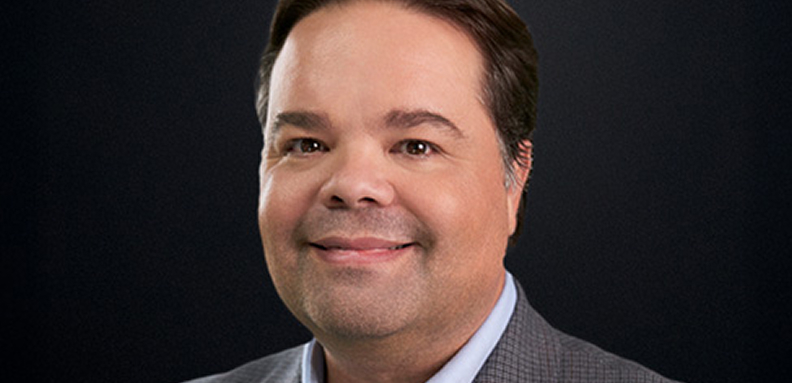
About one in 200 people are born with a genetic condition known as familial hypercholesterolemia, which causes elevated levels of cholesterol. By the time people with the disease are young adults, many of them have the cardiovascular health of someone decades older, explains Carlos Bustamante, a population geneticist who recently joined MBZUAI as Adjunct Professor of Personalized Medicine.
The treatment for the condition, if it’s caught early enough, is straightforward: a daily dose of affordable, cholesterol-reducing drugs, called statins. The problem is that many people with the disease don’t know they have it – not because science doesn’t have the ability to identify it, but because healthcare systems aren’t built to find problems before they arise.
“Healthcare today is still in many ways what it has been for the past 100 years,” Bustamante explains. “It’s reactive and based on people going to see their physicians after they become sick.”
Bustamante has spent his career at the intersection of genomics, statistics, and, increasingly, artificial intelligence, and has worked on translating analyses of the human genome into knowledge that physicians can use in practice. His work has taken him from his undergraduate and doctoral studies at Harvard to Cornell and Stanford. Now at MBZUAI, he sees an opportunity to bridge the gap between scientific research and medicine with the goal of making a meaningful difference for human health.
“The UAE is absolutely forward-thinking when it comes to health,” he says. “And it’s exciting to be at a university that is focused on data modeling and analysis at its core.”
Innovation and its challenges
Bustamante has been a population geneticist for decades – since he was 19, he says. The field examines how genetic variation is distributed across populations and how it changes over time. It draws on a number of other disciplines, including mathematics, statistics, medicine, agriculture, and human history, to name a few.
When he began his career, work in population genetics was almost entirely theoretical. But the arrival of DNA sequencing and reductions in its cost over time changed that and made large-scale genomic studies possible. And now, advances in machine learning and the arrival of foundation models trained on genomic data are changing the discipline again.
But even while technologies can produce more information about the genome, there is a bottleneck in interpreting and making use of the data. As Bustamante puts it, advances in technology have outpaced a healthcare system that could benefit from them.
For example, sequencing technologies can read more than 90% of the human genome, but the fraction of genes that practitioners know how to meaningfully interpret is much smaller. Of the approximately 20,000 genes in the human genome, clinical geneticists have only ordered tests on perhaps 1,500 or 2,000, at most. And for many of these genes, Bustamante explains, our ability to determine harmful mutations from benign ones is incomplete.
“We’ve developed a nearly comprehensive, non-controversial understanding of the genetic basis for disease,” he says, “but we’re far away from being able to implement this understanding in modern healthcare.”
Part of the problem is practical and administrative. Today’s health records capture episodic data – annual checkups, lab work, and the like. They miss the continuous, accumulating picture of how a patient is doing over time. New technologies like smart watches and other wearables have the ability to catalog much of this information, but even when they do, the data is scattered across consumer platforms and largely remains unused in clinical settings.
This is one area where Bustamante sees AI as playing a role in medicine, to integrate and interpret disparate sources of data. Artificial intelligence can also be used to speed pre-clinical development of new therapies and help to determine who might benefit most from certain medications.
At MBZUAI, Bustamante plans to continue pursuing research that has interested him over his career and sees an environment that is characterized by concentration, ambition, and scale.
The University is focused on AI, of course, and it is building outwardly from there as it adds more faculty members and departments that are thematically linked. Bustamante says this approach aids in the communal aspect of learning. He has benefited from attending lectures that are outside his specific area of expertise, gaining insights into recent AI research, which would be less likely at a more conventional research university. His own understanding of what is happening across the fields of AI has accelerated significantly, he says.
Bustamante will have his own lab at MBZUAI that will focus on topics related to population genetics, health, agriculture, and biology. He will help to grow the faculty and attract new graduate students. A company founder himself, he is interested to apply his knowledge of the Stanford and Silicon Valley startup ecosystem to Abu Dhabi. “In the end, science is a human endeavor, and I want to explore how we can expand MBZUAI’s collaborative ties with world-class partners [in government and the corporate sector],” he says.
The university’s role in society
Universities hold a unique position within society, Bustamante says, as academic researchers are entrusted with doing both fundamental and translational research that has societal impact. In an era where AI is poised to make a major impact on society, MBZUAI can play a leadership role in the development of new technologies and help to guide how they are adopted.
Yet the road ahead will have its challenges. Medicines will still take time to develop. Promising technological advances won’t translate beyond the lab. And the gap between the data a field like genomics can produce and the impact it has for patients isn’t closing fast enough. But Bustamante believes that the UAE is the right environment to bridge scientific research and practice.
“The future is here,” he says, quoting the science fiction writer William Gibson. “It’s just not evenly distributed.”
- healthcare ,
- genetics ,
- faculty ,
- medicine ,
- personalized medicine ,
- genomics ,
Related

MBZUAI opens the 2026-27 academic year with first cohorts in computational biology and human-computer interaction
- faculty ,
- students ,
- academic year ,

MBZUAI starts new academic year with distinguished global researchers
New appointments strengthen a faculty community that includes internationally recognized scientists, major prize-winners, and fellows of leading.....
Read More
What it takes to study human biology at scale
The Dean of MBZUAI's Biological and Life Sciences Division, Eran Segal, outlines a future where AI helps.....
Read More