
Commencement 2026: Positive pressure and the art of adaptability
Monday, April 27, 2026
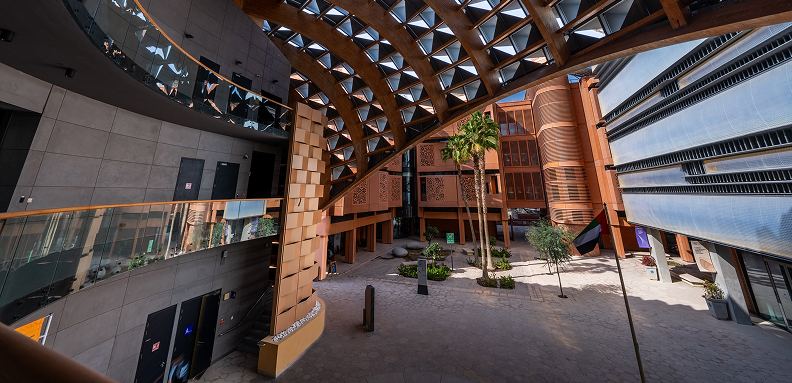
Before arriving at MBZUAI, Bashayer Alsereidi was not an obvious candidate for a master’s in machine learning.
With a background in information security, and little exposure to coding or applied AI, she had virtually no experience working on the kinds of systems she would soon be expected to build.
But the University saw something in her that might have been missed by others: potential.
Now, two years later, she is on the verge of graduating with an M.Sc., having designed and implemented an automated, agentic AI system capable of curating complex datasets for depression detection. All of which speaks to her persistence, discipline, and a determination to grow.
“I am really proud of what I have achieved,” she says ahead of MBZUAI’s Commencement 2026 ceremony on Thursday, 7 May. “My mom recently reminded me that two years ago I had no idea that this is where I would be: that I would join MBZUAI and get my master’s degree; that I would learn so many things and defend my thesis.
“I had no background in AI at the very beginning, and now I have mastered so many things. I’m so grateful for the opportunity to do that, and for the support I’ve received along the way – from my family, the University, my supervisor, and the researchers who helped me. Because of their support and guidance, I have achieved something really big that I never imagined I could do.”
Alsereidi joined MBZUAI’s Machine Learning department in 2024, under the supervision of Fakhri Karray, Professor of Machine Learning. But her journey there was far from linear. After graduating from the College of Information Technology at United Arab Emirates University (UAEU), she moved into a finance-focused role with Mubadala – a job that helped her realize the type of work that she really wanted to do.
“Mubadala was a total shift for me, away from technology and computers,” she says. “So, it was quite hard at the beginning. I still enjoyed it, but when applications opened for MBZUAI, I saw that I had two options. Either continue with what I was doing, or go back to my passion for technology and enhance my skill, improve my education, and enter the world of AI. It was clear that MBZUAI was the best option. AI is the future, and this is where I wanted to be.”
Adapting to new challenges
Alsereidi’s first months at MBZUAI were demanding, requiring her to absorb unfamiliar terminology, adapt to new modes of thinking, and build technical skills at pace. Coming from a different background, she had to close gaps quickly, often learning concepts for the first time while also being expected to apply them.
The hard work was worth it, and by the second year, she was able to implement what she had learned – not just in the lab, but through internships organized by the University’s Careers and Internships team.
“This was the most interesting part for me because I got to work with the likes of Etihad Airways and Space 42 on real life projects,” she says. “To apply what you’re learning is so important, and I gained a lot from those experiences.”
It was Alsereidi’s thesis, however, that became the central focus of her second year, and the point at which her learning was tested most fully.
Her research addressed a fundamental constraint in AI: the difficulty of building high-quality datasets, particularly in sensitive areas such as mental health. In depression detection research – her core focus – datasets are often small and manually curated, requiring researchers to watch and label large volumes of content. It’s an approach that limits both scale and efficiency.
Alsereidi’s solution was to design an automated, agentic system that could carry out this process independently. “My use case was depression detection, and I was curating data from YouTube vlogs,” she explains.
“I collected the data, and then filtered out what I didn’t want or need, and then labelled this collected data – whether they were depression related or not depression related. I then automated the entire process.”
Without a background in psychology, Alsereidi worked with external specialists to define how the data should be classified. But it was a technological quirk that provided the biggest hurdle.
“As I automated the system for data collection, it kept requesting things from YouTube. So, YouTube kept blocking me because it thought I was a bot. The problem was, I couldn’t stop with just a small amount of data – I needed to keep expanding.
“So I had to come up with other ideas. We used residential proxies, VPNs, and so on to keep changing the IP to make YouTube think we were different people. It was a challenge to find the best proxies and keep testing, modifying, and running the system, which took two or three days to complete a single cycle.
“It was stressful, but actually quite enjoyable, because it showed me how adaptable and creative I could be. I felt proud that I could find a solution to the problem and complete my research.”
Balancing pressure and purpose
Alongside the technical demands of her studies, Alsereidi was also managing responsibilities beyond the University. As a married student, she balanced coursework, research, and home life, particularly during the final stages of her thesis, when the workload intensified.
But the pressure that came with these responsibilities never felt like a burden. Rather, they were a source of motivation.
“The pressure was positive – especially as an Emirati,” she says. “When I see that His Highness Sheikh Mohamed bin Zayed Al Nahyan and His Highness Sheikh Khaled bin Mohamed bin Zayed Al Nahyan, and all of the UAE government, are supporting MBZUAI and its graduates, it makes me want to push myself even more.
“I’m an Emirati lady, and I want to make my family proud of me. I want to be proud of myself, and I want to make my country proud of me as well. This is why I never give up. I just keep going and fight as much as I can.”
Her decision to pursue a master’s degree had extra importance – being shaped in part by her mother, who had expressed a wish to see one of her daughters reach that level of education. With a father who holds a Ph.D., Alsereidi became the first among her siblings to achieve this milestone.
“I have four sisters and two brothers, and I am the first and only one, so far, to have a master’s degree. I’ve started this journey, now the others have to continue it.”
And while Alsereidi’s next steps are yet to be decided, she is clear about how much she has developed as an academic, a technician, and a person.
“MBZUAI has really changed me as on a personal level, from my skills and my communication, to how to think out of the box, and be creative in addressing issues,” she says.
“Studying here is not easy – it’s a challenge that needs time and effort – but everyone can do it as long as you have passion and support.
“And it’s important to keep trying new things until you reach your solution – that’s the same for research as it is in our lives. There must always be a solution to every problem, so you can either give up or keep working hard.”
- machine learning ,
- agentic ,
- commencement ,
- Commencement 2026 ,
- graduate ,
- datasets ,
Related

How AI collaboration during training can improve reasoning
Research from MBZUAI demonstrates how collaborative training enables AI models to build stronger, more diverse reasoning abilities.
- collaborative reasoning ,
- llms ,
- icml ,
- training ,
- machine learning ,
Foundational research in the age of AI
The inaugural Dean of MBZUAI's Computing and Mathematical Science Division, Éric Moulines, explains why fundamental research remains.....
- education ,
- computing ,
- Dean ,
- mathematics ,
- research ,
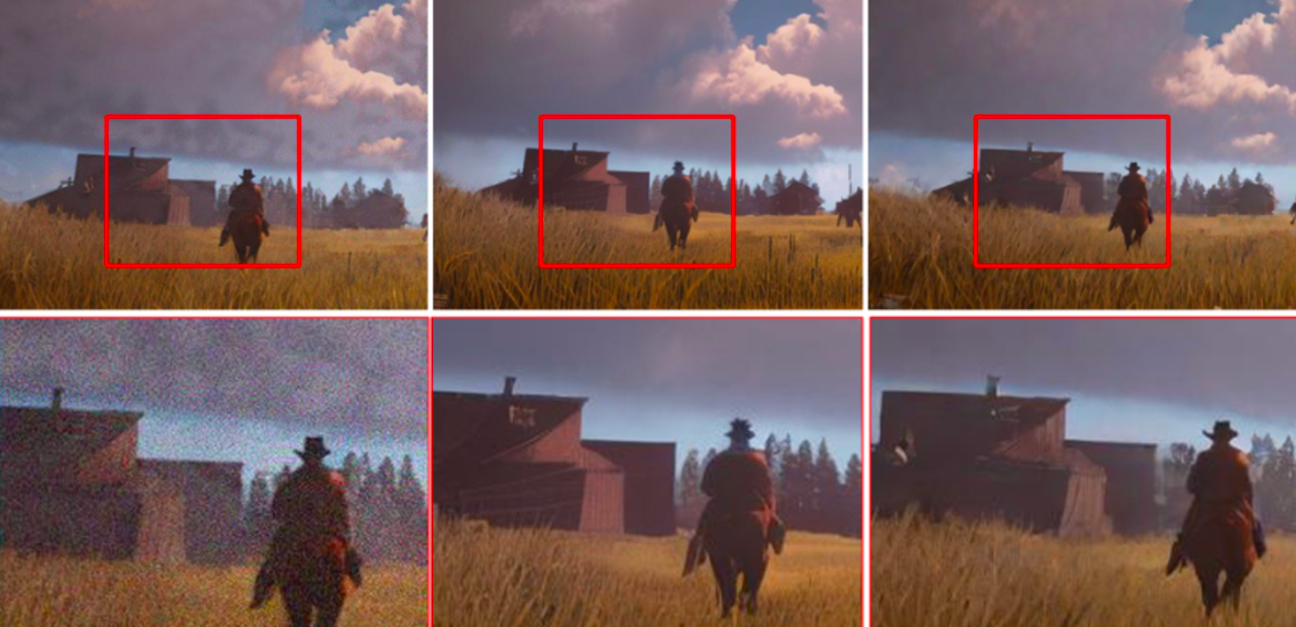
The watermark that wasn't there
A new technique from MBZUAI researchers removes AI image watermarks in seconds – exposing potential weaknesses in.....
- watermark ,
- watermarking ,
- computer vision ,
- CVPR ,