
Commencement 2026: Hard work and soft robotics
Tuesday, May 05, 2026
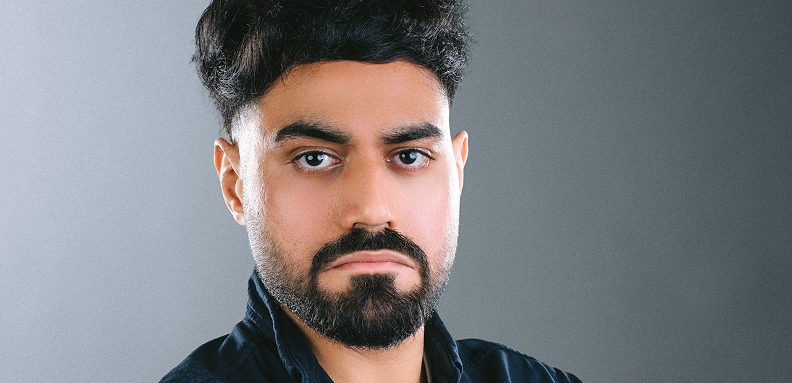
Having opened its doors to its first batch of students in 2024, MBZUAI’s robotics department is graduating its inaugural cohort this year. This represents a milestone for the University, as well as the emergence of a new generation of researchers who will go on to shape the robotics landscape of the UAE and beyond.
One of this number is master’s graduate Ibrahim Alsarraj. Trained in biomedical engineering at Ajman University, the self-confessed “tech geek” was determined to secure a place at the nascent robotics department the moment that MBZUAI advertised the new program. There was just one small problem.
“My background had nothing to do with robotics,” he says. “Of course, there were some connections and intersections, but overall speaking, robotics and AI have nothing to do with biomedical engineering.”
Not to be put off, he immersed himself in intensive learning – pushing himself to put himself in the frame for acceptance.
“I was worried I had nothing to offer, so I went online and took as many courses about robotics on Udemy and Coursera as I could. What is SLAM? What is object detection? What is this, what is that? I finished a few courses, finished a few projects, and got my GitHub ready until – about four or five months away from the application deadline – I was ready. I took the entrance exam and I passed.”
This determination and dedication were to hold him in good stead as he started at MBZUAI and entered a world as yet unknown to him.
“I had the building blocks of robotics, but when I came to the University, everything changed for me, because at that time I didn’t know anything about research. What does research mean? How do you publish? What is a conference? What is a journal paper? I had no idea.
“I have to thank my supervisor, Professor Ke Wu. He was the one who guided me through that entire journey. He helped me understand research, explained important concepts, and gave me a solid foundation. With that, I felt capable of anything – especially at MBZUAI, where the possibilities are endless.”
Helping robots to learn
Alsarraj’s focus during his master’s degree was on one of the more complex areas of the field: soft robotics.
Unlike rigid robotic systems, soft robots are flexible, adaptable, and inherently safer for interaction with humans and uncertain environments. But these advantages come with a significant challenge – they are notoriously difficult to model and control due to their non-linear, highly dynamic behavior.
His thesis tackled this problem directly.
Rather than relying on traditional physics-based modelling, which often requires complex differential equations and precise system knowledge, Alsarraj explored a different approach. By using reinforcement learning, he trained a soft robotic system to perform tasks such as pick-and-place operations without relying on expert demonstrations.
“Instead of modeling everything mathematically, we let the robot learn the task,” he explains.
To address the limitations of reinforcement learning and its reliance on large amounts of data, he combined it with a generative technique known as rectified flow. The result was a system capable of generalizing from just a handful of examples.
In one instance, he was able to extend a learned behavior across the robot’s entire workspace using only two training samples – a significant reduction compared to conventional methods.
The implications are practical and far-reaching. By lowering the data and computational requirements, such approaches could make soft robotic systems easier to deploy in real-world settings, from manufacturing to healthcare.
Alongside his thesis, Alsarraj also contributed to research on sensorless perception in soft robots. The research demonstrated how systems can infer touch, force, and object properties using only internal motor signals, without additional hardware.
“We modeled three dynamics together – the motor electrical dynamics, motor winch dynamics, and continuum robot dynamics – and called it a unified multi-dynamics framework,” he says. “By putting them together, we were able to reconstruct the characteristics or patterns that we observe in the physical robotic system.
“This showed that we can do passive perception. You can touch the robot anywhere and we can tell where you are touching it and how hard you are touching without the use of a sensor. We also showed that with this modelling, we can estimate object sizes. So, if the robot that I’m working on has a spiral shape, when it traps around a cylindrical object, it can estimate the radius of the cylinder without using any sensors.”
Finding flow
Despite his individual efforts – pushing himself to become MBZUAI-ready prior to applying to the University, and the long hours he committed to after arriving at the Masdar City campus – Alsarraj credits the robotics faculty for getting him to where he is today.
“They all supported me in different ways, which I am really grateful for,” he says. “I’m not a particularly confident person, and I would worry sometimes about asking questions, or encountering things that I was not prepared for. But they helped me to overcome this and gave me confidence. Now, when I talk in presentations, I feel like I’m in flow.”
That flow will now continue into his next phase of study, having been accepted as a Ph.D. candidate at MBZUAI – a step he is excited to take, despite having a preference for industry earlier in his academic career.
“Because I had no idea about research before joining MBZUAI, my focus was entirely on industry,” he says.
“That is something I had wanted since I was young. Back when I was six or seven years old, I used to format the family’s PCs and receivers. I was a tech geek, so for a long time I believed that going into industry was what I would do – that’s where I wanted to apply my skills.
“But since joining MBZUAI, I have found that research is my passion. I can definitely say that this is what I want to do from now on.”
And for Alsarraj, that assuredness is only heightened by the MBZUAI environment.
“It helps that student life here is amazing,” he says. “The amount of support and appreciation we get from the faculty, from the Student Life team, and other departments is amazing. And the facilities and amenities are awesome. Everything is taken care of, from accommodation to visas, to insurance, so you can focus fully on what you love.
“All I want to do now is research, so I’m glad that I can keep doing that here.”
- research ,
- robotics ,
- alumni ,
- Ph.D. ,
- M.Sc. ,
- commencement ,
- Commencement 2026 ,
- graduate ,
Related
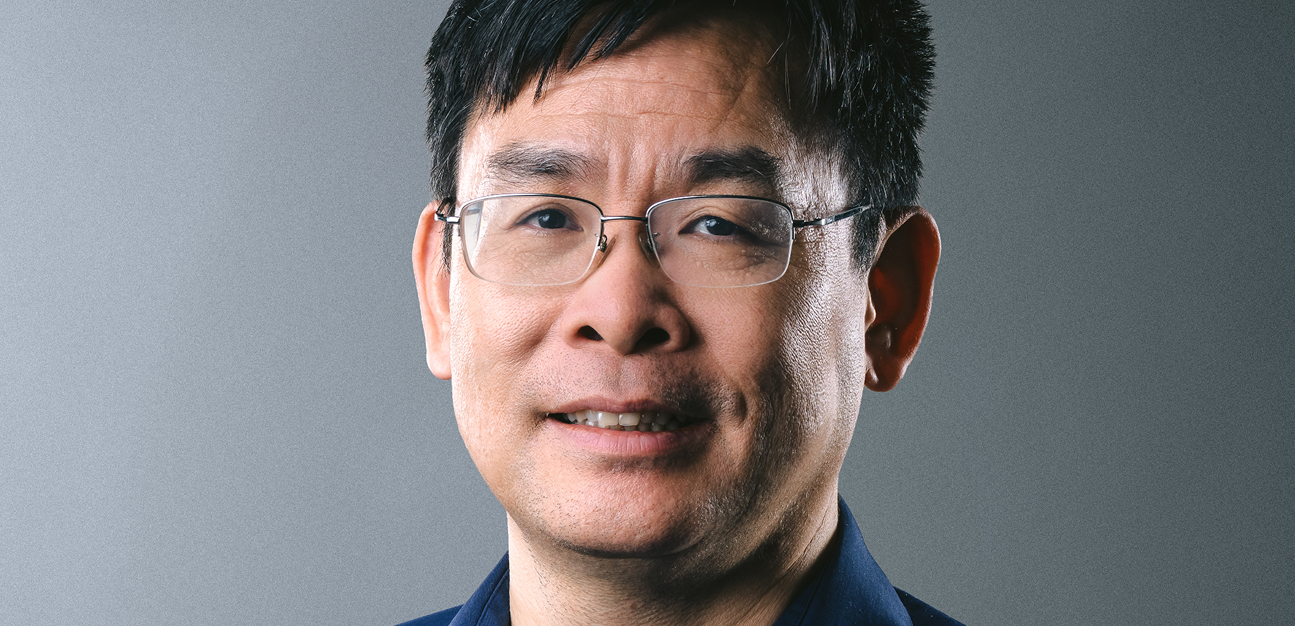
At robotics’ “take-off moment”, Dezhen Song is helping shape the future at MBZUAI
From building MBZUAI's robotics department to developing the next generation of AI talent, Professor Dezhen Song is.....
- vice provost ,
- OSPA ,
- faculty ,
- robotics ,
- innovation ,
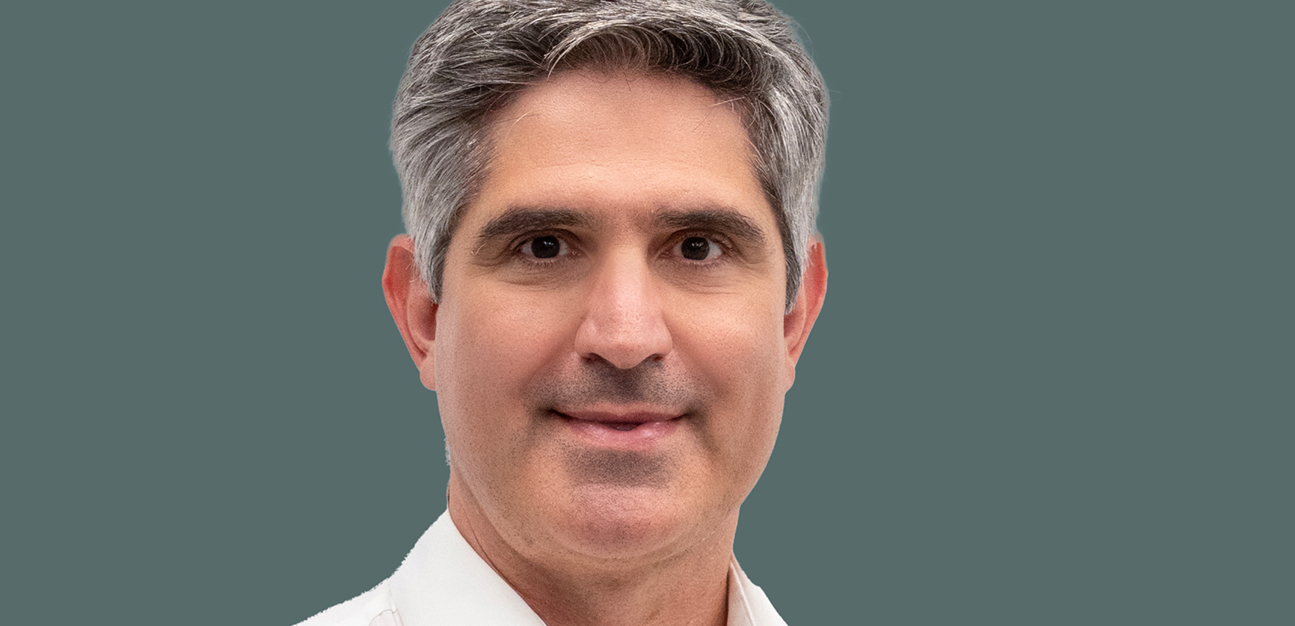
How neural networks are making soft robots easier to control
MBZUAI's Cesare Stefanini has helped develop a new AI-driven control strategy that helps soft robotic arms move.....
- neural networks ,
- control ,
- soft robotics ,
- ICRA ,
- conference ,
- robotics ,

Commencement 2026: Opening the black box of AI
As AI systems grow more human-like, their internal logic remains largely hidden. MBZUAI graduate Chenxi Wang is.....
Read More