
Lisa Su urges MBZUAI students to seize a defining moment in AI
Wednesday, September 02, 2026
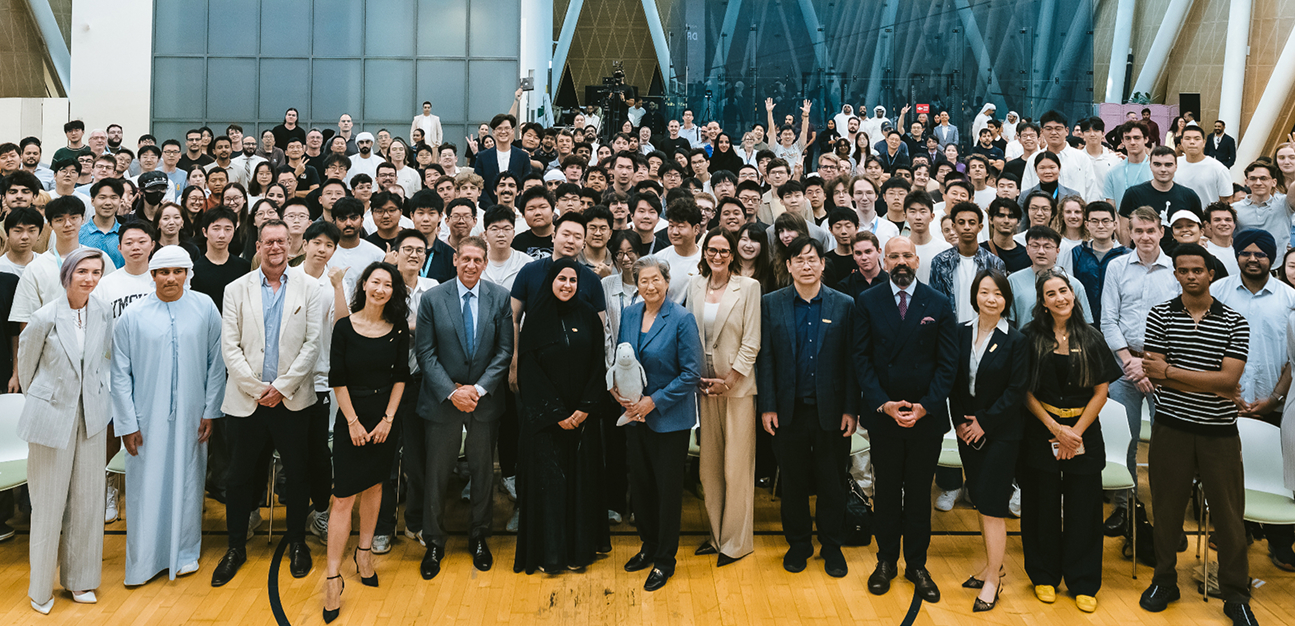
MBZUAI students have an extraordinary opportunity to help shape a technology that is still in its earliest stages, AMD Chair and CEO Lisa Su said during a visit to the University.
Speaking with undergraduate and graduate students during a wide-ranging question-and-answer session, Su discussed the future of AI, entrepreneurship, infrastructure, research, and careers—encouraging students to be ambitious and remain curious as the technology evolves.
Su, who is also a member of the MBZUAI Board of Trustees, described AI as “the most important technology that we’ve seen in our lifetime,” but stressed that the world is still learning how to make the most of its potential.
“I call it the early innings of the technology revolution,” she said. “Whether you’re a student or a researcher, whether you lead a business or work in government, we’re all learning how we harness the power of this technology for good.”
For students beginning their careers amid that transformation, her message was that many of the most difficult problems—and biggest opportunities—remain ahead.
Run toward hard problems
Much of Su’s advice centered on curiosity and the willingness to tackle problems without knowing in advance whether they can be solved.
Asked by a Ph.D. student how young researchers should distinguish between a genuinely difficult problem and the limits of their own abilities, Su encouraged students to “run toward hard problems.”
“My point of running toward hard problems is really being curious about how to solve the next big problem even if you don’t know the answer. Especially if you don’t know the answer,” she said. “I think that should be our motto as engineers and technologists: we are here to solve problems, and the harder the problem, the more innovative and creative you have to be, and that enables you to do amazing things.”
That philosophy has also shaped her view of AI, and she argued that the technology should be viewed, above all, as a powerful tool for solving problems.
“People often say, when are we going to get to AGI? When is AI going to take over all of our jobs or our responsibilities? I think that’s absolutely the wrong way to think about it,” she said. “We should think of AI as a tool. It’s a very, very powerful tool to help us solve problems even faster, more productively, and more capably. But the key piece of any tool is that it depends on how good the operator is.”
Opportunities across the AI stack
The early stage of AI’s development also leaves significant room for students interested in entrepreneurship, Su said.
Asked by an undergraduate student where she would focus if she were 20 years old and looking to build an AI business today, she pointed to opportunities spanning hardware, software, models, applications, and services.
“The AI world is still so much in its infancy that you can focus on just about any layer of the stack, but be clear about where your differentiation is,” Su said.
“If you’re a machine learning person, that could be at the model layer. If you’re an application person, it could be within a certain vertical as it relates to vertical services. Hardware, software—there are many places where true innovation can still happen.”
One particularly important opportunity, she suggested, is translating AI’s underlying capabilities into productive uses within specific industries. She pointed to AMD’s use of AI throughout its own design and manufacturing processes to develop better, faster, lower-power, and more optimized chips and software.
She also highlighted the role of new companies in pushing the field forward.
“Startups are having an outsized impact on innovation compared to large companies these days,” Su said. “They allow people to think out of the box, which is what we need when we’re accelerating technology.”
“Have extreme confidence in yourself”
For students dealing with the challenges of research, Su emphasized the value of learning from failure.
“Sometimes your experiment fails—it does nothing like you expected it to do,” she said. “That’s actually an incredibly good learning moment because we get to analyze what went wrong, what we would do differently the next time. And believe it or not, that happens throughout your entire career. I remember the products that failed better than I remember the products that were extremely successful.”
Her advice was to retain confidence while being prepared to adjust course.
“Have extreme confidence in yourself that you will know how to solve the problem,” she added. “That doesn’t mean you get it right the first time or even the second time or maybe not even the third time. But if you continue to think about what you have learned and how you would adjust for your next project, I think you will do very well.
“There’s no time for being unhappy. The unhappiness should be small, and the curiosity should be very large in terms of what you’re trying to accomplish.”
Learning to solve what comes next
That emphasis on adaptability carried into Su’s final advice to students about what leading technology companies look for when recruiting.
She cautioned against viewing university education primarily as preparation for a particular role or technical task, especially when the technologies underpinning those jobs are changing so quickly.
“Your education is not supposed to be job training,” Su said. “It’s not ‘am I particularly good at programming or am I particularly good at this model or that model or this task or that task.’ What we’re really looking for is people who really are ambitious and who are great problem solvers—able to think very broadly about what goes next.”
Students should follow the subjects that interest them, she added, and later seek out organizations whose wider purpose matches their own ambitions.
“When you think about where you go to work next, follow a company where you are aligned with their vision and their mission because the job is going to change,” Su said. “The job is going to change every six months, every 12 months, every 18 months. But the mission shouldn’t change and the ambition shouldn’t change so much.”
Su also reflected on MBZUAI’s role in preparing students for that changing landscape.
“This is one of the very, very few institutions in the world that has been created with AI as the base foundation,” she said. “To some extent, you’re really forging new ground for how education should be done.”
She told students that they are “extraordinarily lucky to be in this place, in this time, with so much in front of you.”
And as AI continues to change, she concluded, what will matter is not simply mastery of today’s technologies, but the ability to grow with them.
“The actual technology changes,” Su said. “What we need is people who are willing to truly grow as the technology changes and grows. And that is about people who have learned how to think and solve problems and really be very thoughtful in where technology is going to go next.”
- students ,
- board of trustees ,
- on campus ,
- Lisa Su ,
Related
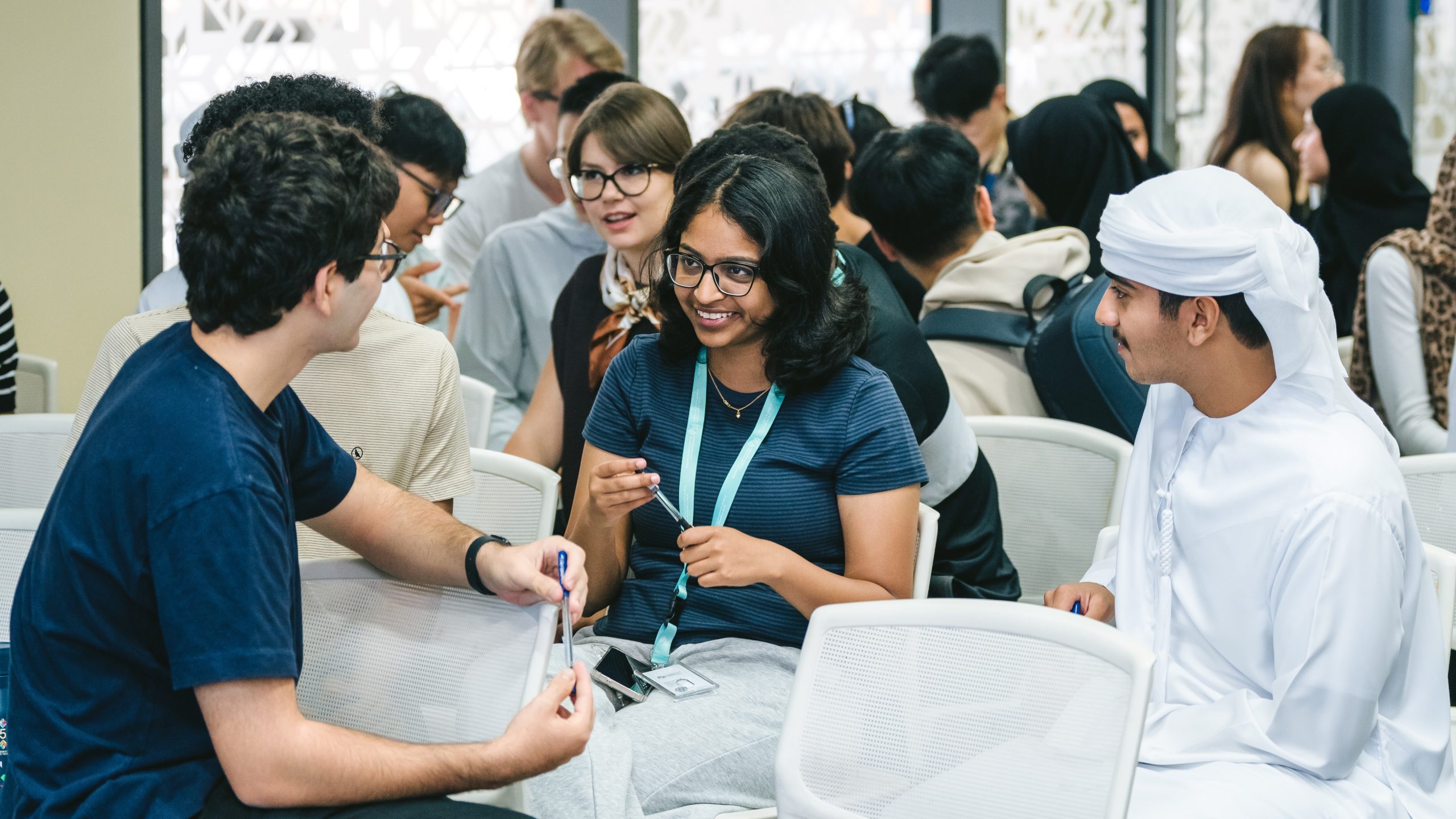
MBZUAI opens the 2026-27 academic year with first cohorts in computational biology and human-computer interaction
- faculty ,
- students ,
- academic year ,

MBZUAI starts new academic year with distinguished global researchers
New appointments strengthen a faculty community that includes internationally recognized scientists, major prize-winners, and fellows of leading.....
Read More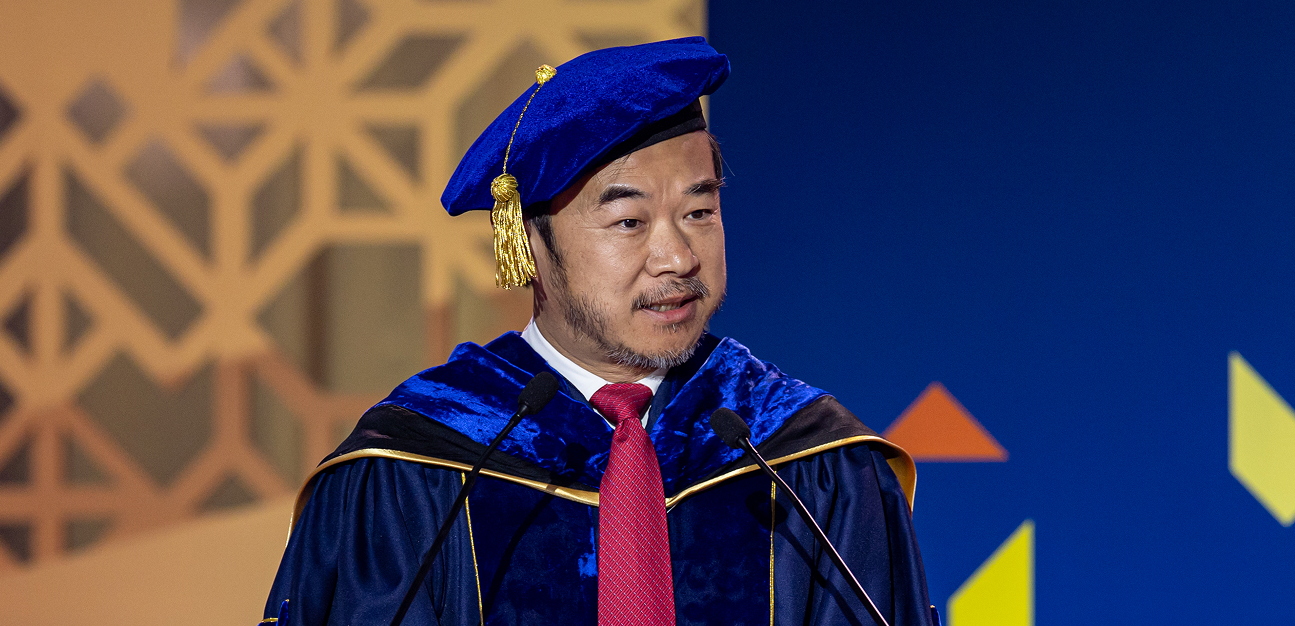
President’s address to the Class of 2026
MBZUAI President and University Professor, Eric Xing, celebrated the graduating Class of 2026 – hailing them as.....
- Eric Xing ,
- commencement ,
- on campus ,
- Commencement 2026 ,
- graduates ,
- president ,