
At robotics’ “take-off moment”, Dezhen Song is helping shape the future at MBZUAI
Friday, June 19, 2026
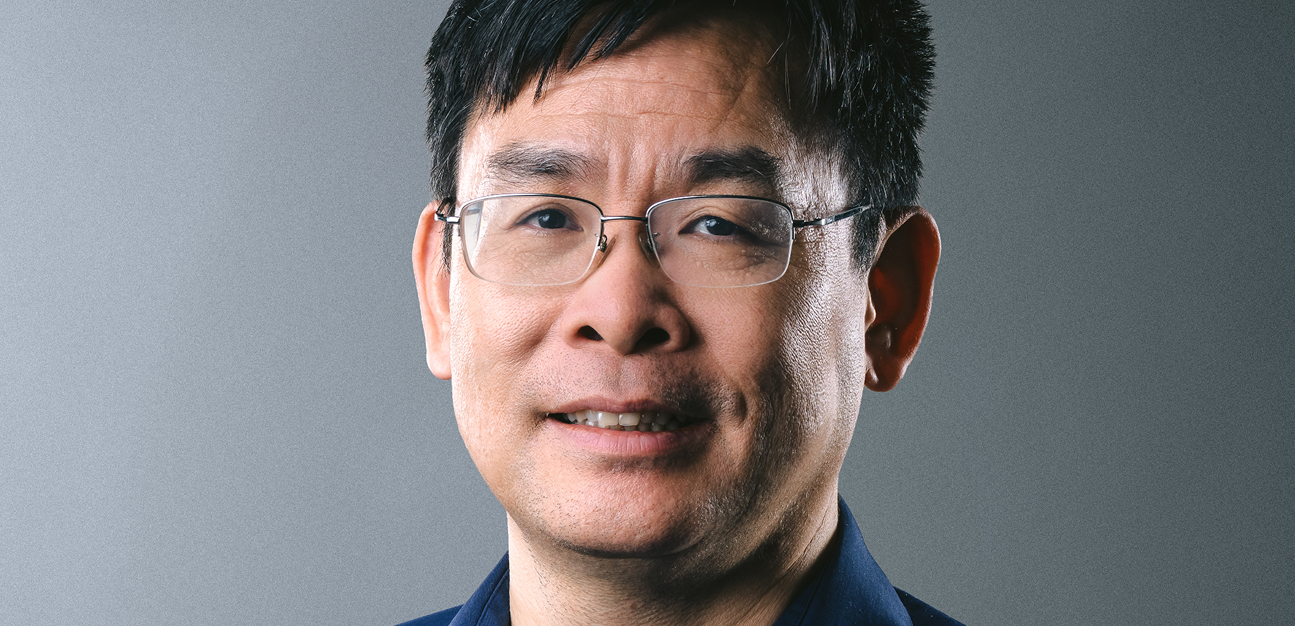
For most of his career, Professor Dezhen Song has focused on the development of robots and their real-world capabilities – especially since the rapid rise of artificial intelligence, which has brought previously far-distant robotic aspirations to within relative touching distance.
Today, the Professor of Robotics at MBZUAI is also helping to develop the next generation of AI talent as the University’s Vice Provost of Student and Postdoctoral Affairs – a position critical to the growth and success of MBZUAI’s dynamic student population.
Two roles that share a common thread, as robotics and MBZUAI both enter transformative periods.
“Large language models have changed the field of robotics forever,” Song says of the first. “As roboticists, we feel like we are at a new take-off stage as a result. Everything is ready. The airplanes are fueled, the power is there, and we are speeding up toward the moment of launch.
“And as a University, we have been in startup mode – building up departments, divisions, and even the Provost’s Office as we prepare for our next phase. Now that we’ve reached this phase, people need to think about their contribution to the University not just through education and research, but also service. That’s what will take us forward.”
A unique vision
Song arrived at MBZUAI in 2023 from Texas A&M University, where he was Professor and Associate Department Head for Academics in the Department of Computer Science and Engineering.
The first member of MBZUAI’s robotics department, he admits that he had never seriously considered moving to the Middle East – until a visit to Abu Dhabi changed his mind.
“The University was already impressing a lot of people despite being so young, but to come here, look at the campus, meet the people, see how things happen here – that was instrumental,” he says. “And then to get to know the city, the way of life; it became an easy decision for me.”
The combination of resources, international collaboration, and academic ambition proved highly attractive, but the most important draws, Song recalls, were the vision and the people.
“The vision at MBZUAI is unique. So ambitious. When I came here, I could immediately see an excellent group of fellow researchers in close-related fields who wanted to do something extraordinary. I felt it was the right place to be.”
Since his arrival, Song has helped build the robotics department from the ground up – recruiting faculty and students, shaping academic programs, contributing to laboratory design, and establishing the foundations of the department’s future.
Creating future leaders
Song and the department have already come a long way since that first dive into new waters. This year, MBZUAI graduated its first batch of robotics students – 17 individuals from the UAE and around the world, whose research centered on areas such as soft robotics, control barrier functions, mechatronics, multi-agent robotics, perception, and more.
To these students – as well as subsequent cohorts – Song has been a popular guiding figure and a nurturing influence. Little surprise, therefore, that he has taken on the much wider role of Vice Provost of Student and Postdoctoral Affairs.
His office supports students throughout their journey at MBZUAI, from recruitment and admissions to wellbeing, career development, and life beyond the classroom.
“We exist to create an environment where students and postdocs can grow into independent thinkers, researchers, and future leaders in AI,” says Song.
“Our role is not only to provide support, but also to help students build the skills, confidence, and resilience required to succeed in a demanding research environment, while also fostering connection, wellbeing, and personal growth.”
Robots in the wild
Balancing his Vice Provost role with his robotics research, Song is also at the forefront of the push to develop truly embodied AI: intelligent systems capable of understanding, reasoning, and acting in the physical world.
Historically, robots excelled in controlled environments such as factories, where every movement and interaction is carefully programmed in advance. But homes, offices, hospitals, farms, and cities are unpredictable. For machines to work ‘in the wild’, they need to be capable of adapting to new situations and learning new skills.
Song and his colleagues are exploring how advances in AI can help create these types of systems that interact naturally with people and their surroundings.
“Take our campus as an example,” he says. “As soon as you park the car, a robot could approach you and say ‘Hi, welcome to MBZUAI – how can I help you today?’ You could ask it any questions about the institution. It could guide you to different offices. If you want coffee, it could help you with that. This is the kind of thing we’re trying to do here – to make robots that have an immediate physical impact for people.
“Why shouldn’t we be the first university to have a campus-wide service robot? That’s something we are very eager to put together and run on a daily basis, and the whole University has the expertise to make this happen – not just the Robotics Department.
“Natural language processing can enable robots to speak Arabic. Computer vision can use video analysis to train robots to mimic human emotions – to make them more natural and less robotic. Every department can contribute.”
The aim, he adds, is to create robots that can serve society in a variety of ways.
“To do this, they need to be adaptable and able to learn, so we envisage robots that can download different skills sets whenever they need them. For example, a robot walking into my kitchen doesn’t know how to work my stove. If it can download that information, it would immediately know how to operate it.
“This is in the future, of course, but it is gradually becoming reality right in front of our eyes. And we need to be the front-runner.”
Positive social impact
Teaching robots how to perform contact-rich tasks is a particular area of interest for Song, and – as he says – “the most difficult part”.
“Small things like opening a door, picking something off the ground, or operating a tool – these are very complex,” he says.
“But if we can design a framework to enable a robot to learn these tasks on its own, then that robot would soon build up the skill sets to do even more complex things. And if we can enable robots to transfer skills between each other, then they would build up a skill library that allows them to make more meaningful long-term decisions and perform more autonomous behaviors.”
The implications of this type of work are far-reaching, from kitchen-based robots that can select ingredients and make a meal to mobility robots that can support people with disabilities and agricultural robots that can improve food security.
This last one is of specific interest to Song, who has dedicated much of his research to the topic.
“I’ve always felt food is the number one security issue for everyone in the world,” he says. “If we can use robots to help produce healthy food for the world’s population, this would be huge. Robots could help with weed control to fruit picking and planting, among other things.
“Modern agriculture tries to plant a lot of things together for larger-scale mechanization and increased efficiency. But this has a huge environmental impact. You have to use a lot of chemicals and even genetically alter seeds to prevent disease and insect infections.
“There is also a high labor cost, so affordability is an issue. I hope robotics technology can provide a solution to the trade-off between the quality of food and the productivity, so people can afford cheap, high-quality food, with less environmental impact, less reliance on genetically-modified seeds, and less use of chemicals.”
Whether developing robots capable of learning new skills or helping students develop their own, Song sees both missions in similar terms: preparing for a future that is arriving faster than anyone expected.
“The path is now open and the first to walk it are the ones who will make a difference in history. I’m excited to see what we’ll do to make this difference.”
- innovation ,
- robotics ,
- faculty ,
- OSPA ,
- vice provost ,
Related
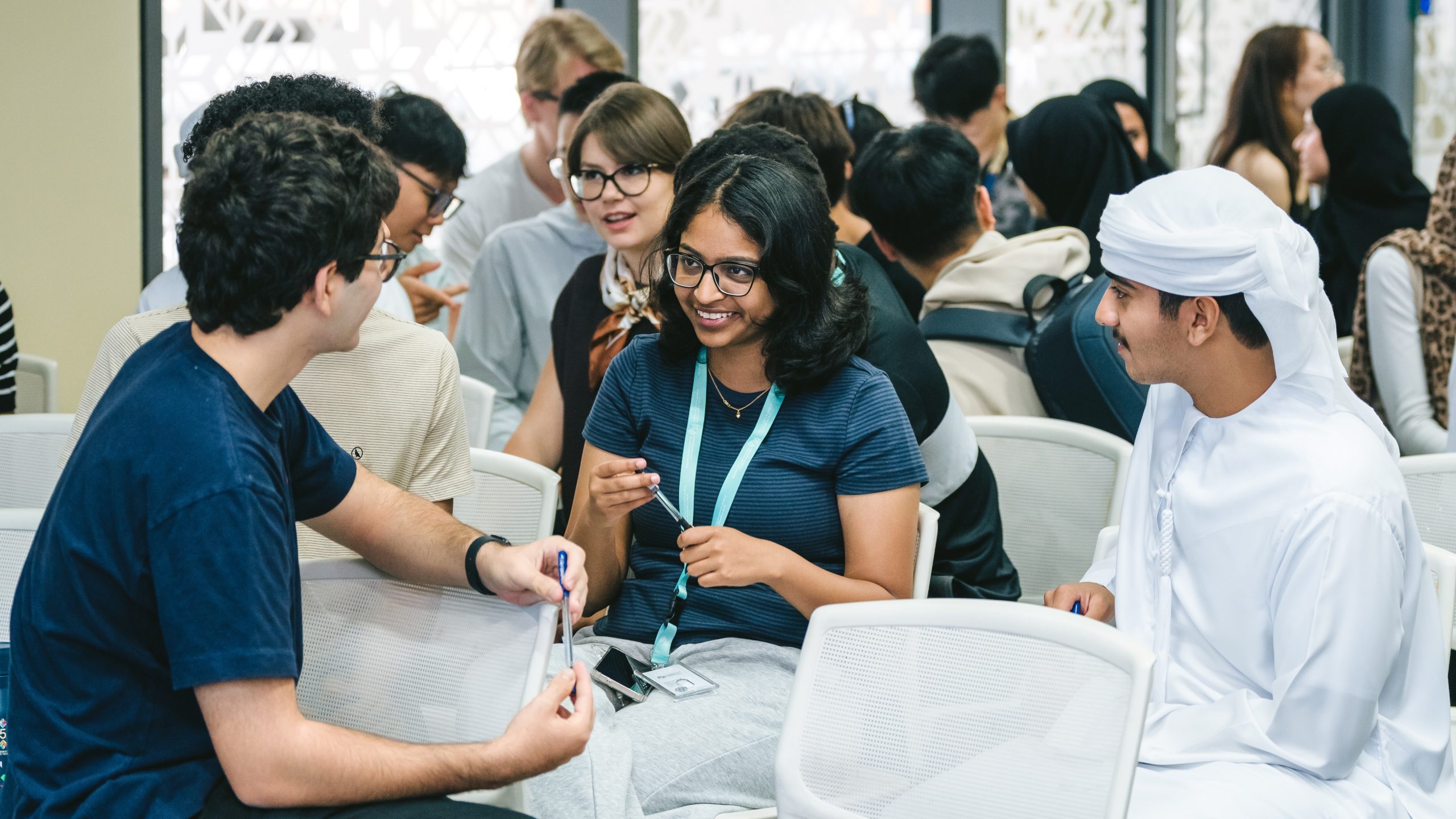
MBZUAI opens the 2026-27 academic year with first cohorts in computational biology and human-computer interaction
- faculty ,
- students ,
- academic year ,
MBZUAI starts new academic year with distinguished global researchers
New appointments strengthen a faculty community that includes internationally recognized scientists, major prize-winners, and fellows of leading.....
Read More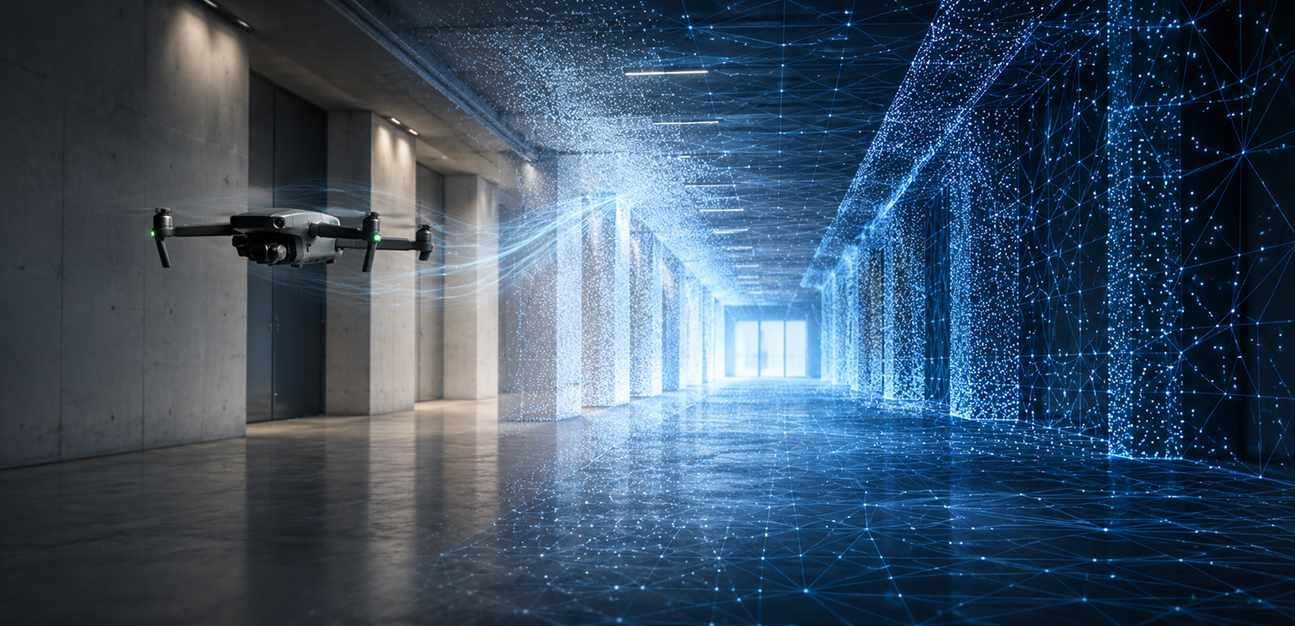
How a 3D foundation model can help robots find their bearings
MBZUAI researchers have developed an AI-powered approach enabling robots and drones to initialize faster and more reliably.
- research ,
- robotics ,
- drones ,
- conference ,
- 3D foundation model ,