
From first cohort to valedictorian: Hanoona Rasheed’s rise at MBZUAI
Tuesday, May 12, 2026
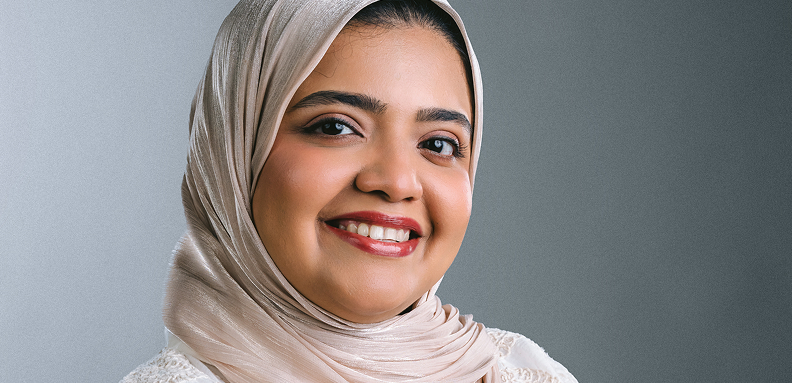
When Hanoona Rasheed arrived at Mohamed bin Zayed University of Artificial Intelligence (MBZUAI), she stepped into the unknown – joining the inaugural cohort at the world’s first AI research university as it was still defining itself.
Six years later, she leaves as the Class of 2026 valedictorian, with a research record that rivals seasoned academics: more than 5,800 citations, 7.8 million-plus model downloads, and papers accepted at the world’s most prestigious conferences including CVPR, ICCV, NeurIPS, and ICLR.
And she’s not done yet. Despite opportunities from Silicon Valley, Hanoona will remain at MBZUAI as a postdoctoral researcher – continuing to explore where ideas take shape.
Don’t make the mistake of thinking that staying in familiar surroundings means she has taken an easier route, however. Working at the frontier of multimodal AI is as demanding as it is exhilarating, she says.
“It is a fast-moving and deeply competitive space, one where research groups go head-to-head with the world’s largest AI labs and where the pace is relentless and timing is everything.”
That intensity is what she calls “fun” – offering a sense of her character: one that is committed, focused, and driven by purpose
Growing alongside a university
Hanoona’s journey mirrors MBZUAI’s own rise. She joined as part of the first master’s cohort in 2021 and chose to stay for her Ph.D. in Computer Vision – growing not just academically, but personally.
Arriving without a research profile, she says MBZUAI made her an independent researcher.
“During my time here, I was able to build my profile through work, mentorship, and consistency,” she says. “That growth is not something I see only as a personal achievement. I see it as an example of what this University makes possible. It shows how much can happen when students are given the right environment and then rise to meet it.”
She says the best advice she received about doing impactful research is to choose the right problem at the right time, and to care deeply enough to do it well.
Now, Hanoona no longer requires an introduction at conferences – her research speaks for itself, positioning herself within the global AI community alongside MBZUAI.
Being accepted into the AI research community as a young Ph.D. candidate is what she says she is most proud of.
Research that reaches the world
Hanoona’s work sits at the forefront of multimodal AI foundation models; integrating visual and language understanding while addressing challenges that are both timely and consequential for real-world AI applications.
Even at this early stage of her career, she has built a stand-out publication record that is remarkably strong for a recent Ph.D. graduate. GLaMM and Video-ChatGPT are among her most impactful works, widely cited and helping shape subsequent research in multimodal AI.
She was head-hunted for internships at Meta and Adobe in San Francisco, where she co-authored state-of-the-art models such as Perception Encoder (NeurIPS oral) and PerceptionLM (NeurIPS Spotlight) – part of a broader body of research that has drawn wide attention for its quality and influence, generating more than 7.8 million downloads.
Impact, for her, is measured not just in publications or surpassing benchmarks, but in real-world adoption.
“There are people who have told us: I got a promotion because I used your model,” she says. “It is about contributing something that others can build on, use, and carry forward.”
By ensuring her work is reproducible and accessible, she has helped shape tools that others can build on for medical, transport, safety, and more – amplifying their reach far beyond the lab.
Work fast, remain patient
Her six-year journey unfolded against a backdrop of global disruption. Yet through it all, her focus never wavered. Research demands patience, resilience, and the ability to work through uncertainty. For Hanoona, that mindset became essential.
“We have learned to quickly move on, and not wonder, ‘Oh, why did that happen?’” she says.
Rather than being derailed by external challenges, she stayed grounded in the work – keeping pace in a field where timing can define success.
“If you take six months and you’re working on something hot, it might already be too old,” she explains. And in multimodal foundation models, that is not an exaggeration.
What has kept her work relevant and impactful, she says, is the ‘hunger in the room’: strong collaborations with faculty and fellow students built on a shared refusal to settle, where everyone around you is driven, committed, and pulling in the same direction.
That, she says, is the culture their labs have built at MBZUAI, and it is their recipe for keeping up.
Choosing to stay, and why it matters
Hanoona moved to the UAE from India when she was four and considers it home. She has abundant gratitude – for the institution, the UAE, and the vision that created both.
“Places like this do not exist by accident,” she says. “They are built through vision, belief, and investment in people. That has opened doors that may not otherwise have been possible.”
She says MBZUAI offers something uncommon: an ecosystem designed to remove friction and enable focus.
“I know how rare it is to find an environment that is so focused on excellence, where people around you are ambitious, sharp, and genuinely committed to doing meaningful work,” she says. “Being surrounded by that kind of energy pushes you to do better yourself.”
For many students, studying abroad comes with layers of complexity – housing, finances, and logistics, to name a few. At MBZUAI, those burdens are minimized, allowing students to focus entirely on research. That foundation allowed Hanoona to push further than she imagined possible.
Mentorship and collaboration that shapes outcomes
While being named valedictorian means a great deal to Hanoona, she resists the idea of individual success.
“None of this happens alone – it is shared success,” she says, adding that her work has been shaped by supervisors, collaborators, lab mates, co-authors, and peers.
“Research is never individual,” she says. “Impactful work is always, in one way or another, a collective effort.”
Hanoona credits finding the right mentors for her success and says her supervisors Dr. Salman Khan and Professor Fahad Khan, made all the difference.
“MBZUAI’s faculty are active researchers, and they want you to truly learn and succeed at their level,” she says.
Now a mentor herself, she hopes to give others the same opportunity. And in the meantime, Silicon Valley can wait.
Related
Building AI that understands the Gulf’s climate challenges
An MBZUAI team has developed Gulf Climate Agent (GCA), an AI framework designed specifically for climate decision.....
- ACL ,
- conference ,
- computer vision ,
- climate change ,
- research ,

Training multimodal AI with limited labels for a world it has never seen
A new framework from MBZUAI researchers helps AI systems remain effective when data is scarce and inputs.....
Read More
Two heads are faster than one
MBZUAI researchers have developed a new approach to video understanding that reduces computational costs while maintaining accuracy.
- research ,
- large multimodal model ,
- CVPR ,
- video ,
- conference ,