
Commencement 2026: Building AI that sees what matters
Monday, May 04, 2026
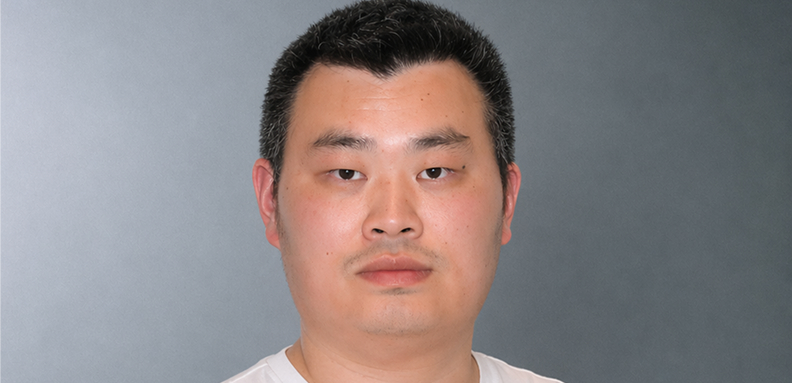
Moving from Shanghai to Abu Dhabi wasn’t the only major shift for Chao Qin when he joined MBZUAI as a Ph.D. candidate in computer vision in 2022.
Before arriving in the UAE, Qin’s work sat within autonomous vehicles – developing systems designed to interpret visual data and make decisions without human intervention.
At MBZUAI, however, a discussion with his supervisor, Professor Fahad Khan, changed his focus almost entirely – taking him away from driverless cars.
“He suggested I look at research into medical imaging, as this is such a promising and important direction,” explains Qin. “Every day, doctors around the world look at medical images and try to understand them as best they can. But doctors’ time is limited, and they are under a lot of pressure. So, it’s important to develop AI tools or models that can help relieve their pressure and workload, which ultimately help the patients.”
The suggestion appealed to Qin, who wanted to make a positive impact with his work. But there was a significant challenge.
“This was a completely new area for me – I didn’t have any knowledge of medical imaging,” he says. “What’s more, I had to learn both sides – the technical part and the medical part. It was not easy to learn both simultaneously.
“I was fortunate to have great collaborators. Their guidance, instructions, and ideas really made the difference, and I learned a lot from them. Without their help, I couldn’t have achieved what I did.”
Spotting things humans might miss
What Qin achieved was to create a second pair of eyes. But not just any eyes: eyes that can find things even the sharpest human vision might overlook.
“AI can help doctors find things they might miss or can’t easily see, as well as making measurements more accurate and saving time,” he explains. “My thesis is made up of five pieces of work that contribute to this.”
The first two of these five focus on breast cancer detection in ultrasound videos.
“Breast cancer affects about 2.3 million women worldwide every year, and early detection is critical,” he says. “During an ultrasound exam, the doctor swabs a probe across a body and acquires a video. I built two models called STNet and FA-DETR that can watch the video and detect tumors across multiple frames. Both these models are accurate and fast, and can be deployed in real clinical settings.
“STNet has been early accepted by the MICCAI conference and FA-DETR has been accepted by the MIDL conference.”
His third project is also about ultrasound, but focuses on segmentation.
“For this, I built the largest open-source ultrasound dataset in the world, called OpenUS. It has more than 471,000 images from 53 different public datasets. Then, I developed a foundation model called USSAM2 that can outline any structure in ultrasound images, videos, and even 3D scans.
“It works well, even on data it has never seen before, which is very important for real clinical use.”
The fourth project is DB-SAM – a best paper finalist of MICCAI 2024 that adapted the powerful Segment Anything Model (SAM).
“I adapted SAM to work across many types of medical images, including CT scans, MRIs, X-rays, and pathology,” says Qin. “We trained and tested our model on 30 different medical tasks, and it performed better than previous methods.”
His fifth and final piece of work focused on computational pathology.
“The first four focused on the organ level, but for the fifth piece of work, I built a system that can automatically find and outline individual cells or nuclei, and allow pathologists to correct model prediction errors with a single click of the mouse. This capability is missing in other methods, but very important.”
The importance of a positive mindset
Despite the successful application of his research, getting it to the point of practical use was not plain sailing.
“There were many moments when experiments didn’t work, and I had to rethink my approach,” recalls Qin. “And some of it was incredibly time consuming. For example, when I was building the ultrasound foundation model, I collected and cleaned the data from 53 different sources. Each dataset has different formats, different labeling styles, and different quality levels. So, building a clean, unified dataset took months of careful work.”
The time element and the challenging experiments threatened to take their toll on Qin, who kept his spirits high with a long-term perspective, and positive mindset.
“During the research journey, I would sometimes feel some pressure,” he says. “Especially when I couldn’t get ideal results from experiments, or when the models didn’t work. But I was always excited about the research because, every day, I could learn new things, and this makes me happy.
“There is always a reward. In my opinion, every failure is a great experience and a good lesson. And to know that my research can help doctors, patients, and academic communities – this was always something good for me to remember.”
A personal journey
Qin will soon graduate as part of MBZUAI’s Class of 2026, and his next step will see him undertake a postdoctoral appointment at MBZUAI, where he will fulfil his desire to “continue working at the intersection of AI and healthcare, and continue to help doctors make better decisions for their patients”.
He is also unwavering in his appreciation for MBZUAI and what it has given him during the past four years.
“The Ph.D. is not just an academic journey, it’s a personal one,” he says. “The friendships I’ve built here, my supervisor, my colleagues, the discussions about research, the shared celebrations when a paper gets accepted – these are memories I will carry with me forever.
“MBZUAI is a unique place because everyone here is working on AI and the environment is so research focused. You can walk into any lab or office and have a meaningful conversation about cutting-edge work that’s taking place. It’s the kind of intellectual energy that is hard to find elsewhere.”
And having gone through the experience of a Ph.D., he has a clear piece of advice for incoming doctoral students.
“Be patient with yourself. A Ph.D. is a long journey and there will be many difficulties along the way. Experiments will fail, papers will be rejected, and you will sometimes feel lost. This is normal. The key is to keep trying and learning from each failure.
“You must also build a good relationship with your supervisor. They will be your most important resource, so communicate openly and ask for help when you need it. And take their feedback seriously. Your fellow students are also valuable. They understand what you are going through and you can learn a lot from them.
“The last thing is to think about the real-world impact from the beginning. It is easy to get lost in purely technical improvements. But the most meaningful research is work that can actually make a difference in people’s lives.”
- healthcare ,
- computer vision ,
- Ph.D. ,
- medical ,
- commencement ,
- medical images ,
- Commencement 2026 ,
- graduate ,
Related

Building AI that understands the Gulf’s climate challenges
An MBZUAI team has developed Gulf Climate Agent (GCA), an AI framework designed specifically for climate decision.....
- ACL ,
- conference ,
- computer vision ,
- climate change ,
- research ,

Training multimodal AI with limited labels for a world it has never seen
A new framework from MBZUAI researchers helps AI systems remain effective when data is scarce and inputs.....
Read More
Two heads are faster than one
MBZUAI researchers have developed a new approach to video understanding that reduces computational costs while maintaining accuracy.
- research ,
- large multimodal model ,
- CVPR ,
- video ,
- conference ,