
Commencement 2026: Advancing safer robotics in the real world
Thursday, April 30, 2026
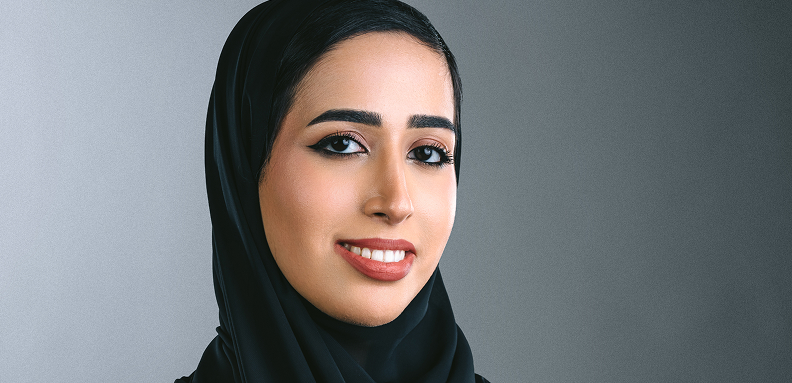
Robots are no longer just walking – they are now running faster than humans, navigating real-world environments autonomously, and approaching human-level coordination, while safety emerges as the next critical frontier.
Just last month, a humanoid robot called Lightning completed a half marathon (21km) in 50 minutes, 26 seconds – beating the human world record of around 57 minutes. It ran autonomously, navigating the course in real time, and reducing the next best robotic time by 78% in just a year.
As these advances accelerate real-world deployment across robotics, one Mohamed bin Zayed University of Artificial Intelligence’s (MBZUAI) graduate is focusing on how robots move safely in the real world.
Emirati Salamah Almazrouei is part of the University’s first robotics cohort, one of just 17 students graduating with a Master of Science in Robotics at Commencement 2026.
And with the young robotics department quickly gathering momentum, having only been launched in 2023, Almazrouei says she is not ready to walk away from MBZUAI’s unique research environment – choosing instead to continue her academic journey by pursuing a Ph.D. in robotics.
Safer, more reliable, and physically feasible
As artificial intelligence (AI) systems such as large language models (LLMs) begin to generate instructions for robots, they can suggest actions such as picking up objects, navigating spaces, or working alongside people.
However, these instructions are not always safe or physically feasible. This is where control barrier functions (CBF) come in – acting as a safety layer that adjusts a robot’s movements to prevent collisions, maintain stability, and ensure safe interaction with people and surroundings.
The result is smarter robots that can follow AI-generated instructions while operating safely and reliably in dynamic environments.
This is where Almazrouei’s work comes in. Her research is not tied to a single robot platform but instead focuses on improving safety across a range of robotic systems.
“My research is designed to be general and can be applied to different types of robots including robotic arms such as Franka, as well as systems used in areas such as manufacturing, healthcare, and humanoid robots,” she explains.
“It adds a safety layer that checks a robot’s planned movement before execution and adjusts it when necessary to keep the motion safe and smooth.”
Her work helps create a bridge between LLM motion generation and safe execution for robotic manipulators, especially those operating in safety-critical settings such as surgical arms.
Same tools, different problem
The safety tools exist, and AI-generated motion exists – but combining them into a reliable, real-time system remains an open problem.
In practice, CBFs act like a “safety shield” that modifies control commands before execution and are well-established in robotics and control theory. Today, they are widely used to guarantee safety in real time in industrial robots, autonomous vehicles, and drones.
However, direct integration of LLM outputs with safety guarantees such as CBFs is still emerging, making Almazrouei’s thesis relevant.
These advanced AI systems are not widely deployed in production systems and remain largely research prototypes or in early-stage integrations.
LLMs can generate high-level plans or motion commands, Almazrouei says, but these may be unsafe or abrupt movements that fall outside safe operating limits.
“The idea is to take a nominal trajectory generated by a planner or policy and evaluate whether it satisfies safety constraints, such as position, velocity, and acceleration limits,” she explains.
“If the trajectory violates those constraints, a filtering step modifies it so that the resulting motion remains within the safe set, while staying as close as possible to the original trajectory.”
Growing the robotics ecosystem in the UAE
MBZUAI launched its robotics programming in 2023 as a capability amplifier for the University and the UAE.
Its faculty and student body continue to grow, and together they aim to push the boundaries further – creating AI systems that allow machines to learn at scale, operate smarter, and support humans in meaningful ways. In doing so, they are taking on advanced challenges in robot learning, humanoid robotics, human-computer interaction, and sensory awareness head-on.
Throughout her master’s research, Almazrouei contributed to this mission with commitment, maturity, and a strong sense of ownership, says her supervisor, Assistant Professor of Robotics, Abdalla Swikir.
“What impressed me most was her ability to grow quickly as a researcher, respond positively to feedback, and push the work forward with consistency and determination,” he says.
“She produced a strong thesis that I believe can form the basis of a good publication. Her positive attitude, together with her strong work ethic, makes her a valuable member of our research environment.”
Swikir adds that he looks forward to continuing to work with Almazrouei as a Ph.D. candidate.
“It is great to see talented students like Salamah continuing their research journey here in the UAE and contributing to the growing robotics and AI ecosystem in the country,” he says.
Talents like Almazrouei will be in high demand in the UAE as the country begins building its robots through a number of manufacturing hubs and global partnerships, signaling a shift to sovereign robotics capability. Robots will be seen in malls, infrastructure, and industry as more physical AI systems pop up in real environments.
A deep commitment to impactful research
Coming from a traditional information technology background, Almazrouei’s two years at MBZUAI have intensified her passion for robotics and AI.
“It has strengthened not only my technical knowledge in robotics and artificial intelligence, but also my confidence, curiosity, and passion for meaningful research,” she says.
“The opportunity to learn from outstanding faculty, work alongside talented peers, and be part of a community driven by innovation and excellence has been incredibly meaningful to me.
“It is an environment that continually inspires growth, curiosity, and a deeper commitment to impactful research
“The University constantly pushed me to aim higher, think critically, and grow. It has shaped how I want to contribute to innovation and real-world impact.”
And what makes it most rewarding, she adds, is the opportunity to contribute to the UAE’s growing leadership in innovation and advanced technology.
- robotics ,
- alumni ,
- Ph.D. ,
- Safety ,
- commencement ,
- master's ,
- Commencement 2026 ,
Related
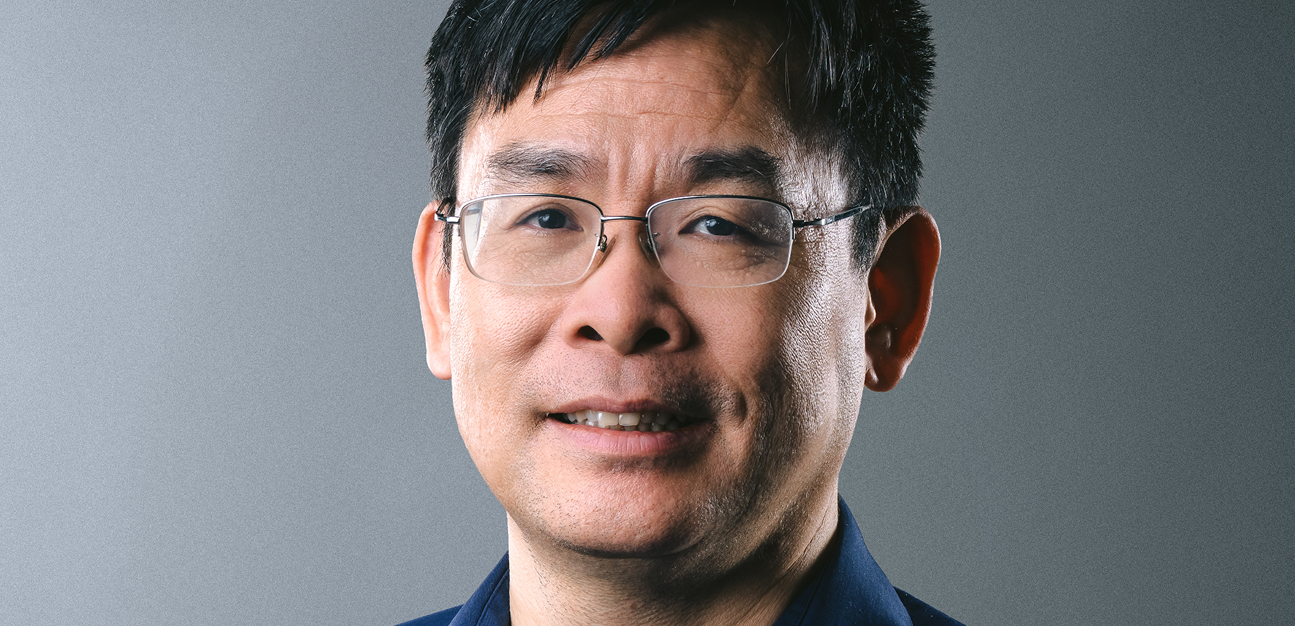
At robotics’ “take-off moment”, Dezhen Song is helping shape the future at MBZUAI
From building MBZUAI's robotics department to developing the next generation of AI talent, Professor Dezhen Song is.....
- vice provost ,
- OSPA ,
- faculty ,
- robotics ,
- innovation ,
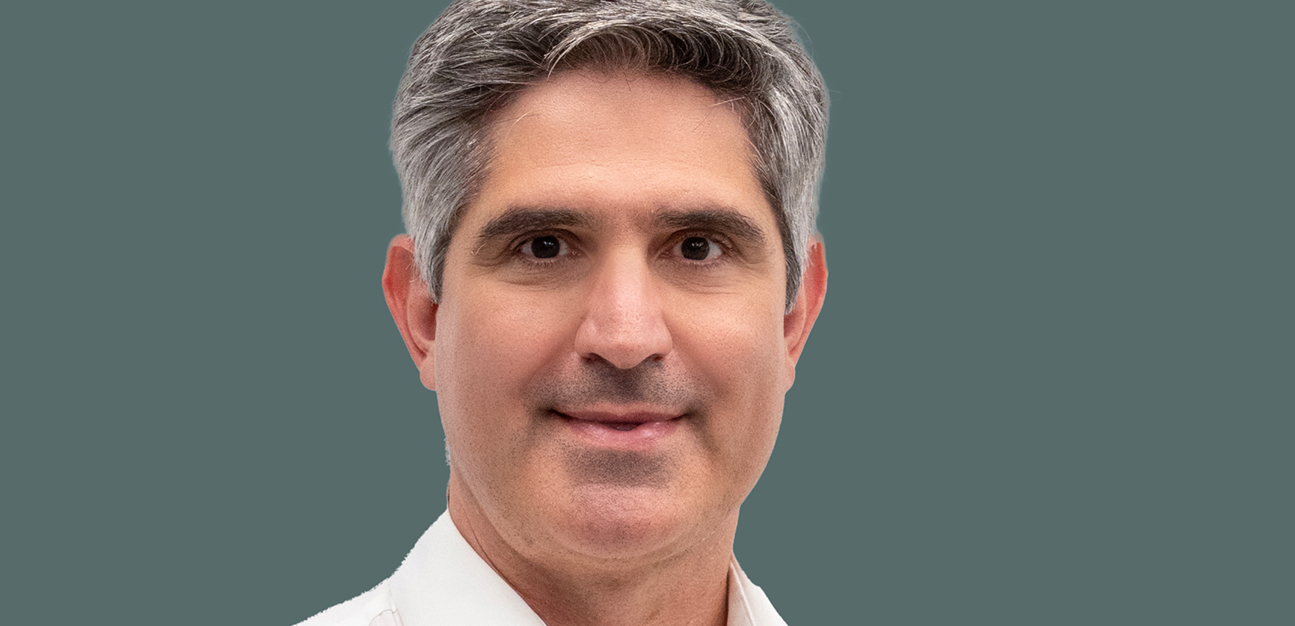
How neural networks are making soft robots easier to control
MBZUAI's Cesare Stefanini has helped develop a new AI-driven control strategy that helps soft robotic arms move.....
- neural networks ,
- control ,
- soft robotics ,
- ICRA ,
- conference ,
- robotics ,

Commencement 2026: Opening the black box of AI
As AI systems grow more human-like, their internal logic remains largely hidden. MBZUAI graduate Chenxi Wang is.....
Read More