
Commencement 2026: Embracing the opportunity, owning the responsibility
Tuesday, April 28, 2026
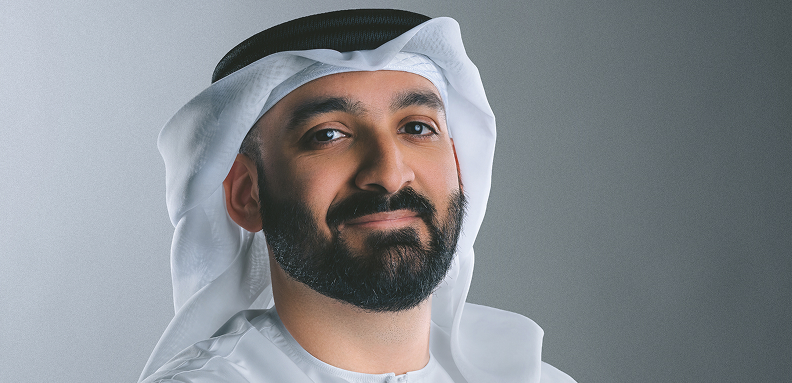
Abdulla Almansoori’s path to AI research didn’t begin in a lecture hall or a laboratory. It began with curiosity. Boundless, self-started curiosity.
In 2013, just as he was starting his undergraduate studies in industrial engineering, Almansoori came across early discussions of what would later be known as the deep learning revolution. At the time, it till felt like something from a science fiction movie. But what caught his attention was not the futuristic promise of AI. It was the mathematics.
“When I saw the math, I felt like, okay, this is something principled,” he recalls. “There’s a foundation to this field.”
That moment sparked an enduring ambition. Without formal training in the field, Almansoori began to teach himself programming and explored AI independently. His early studies even led him to a deep examination of good old-fashioned AI (GOFAI) symbolic approaches that he says “nobody learns nowadays” – a detour he now sees as valuable context for understanding how we got to where we are.
But despite his rapidly growing interest in AI research, Almansoori’s future in the field was far from certain.
Bound by scholarship constraints and unable to switch majors, he committed to completing his industrial engineering degree at Purdue University – while preparing for the transition to computer science. And he was soon where he wanted to be, pursuing a master’s degree from the University of Southern California (USC). But with foundational gaps to fill and a lack of research experience, the shift was “very challenging.” Research opportunities in AI remained out of reach.
After completing his studies and returning to the UAE in 2019, Almansoori found himself at a crossroads. AI was gaining global momentum, but the local ecosystem was still emerging. Determined to stay close to the field, he joined a bioinformatics lab at New York University Abu Dhabi. Here, Almansoori found that the principal investigator “was very supportive of [his] AI background” and eager to apply machine learning in her research. At last, he was applying AI techniques to real-world problems – with a keen collaborator.
Starting a new chapter
That milestone was soon eclipsed by an even bigger development. For both Almansoori and the UAE.
The announcement of the Mohamed bin Zayed University of Artificial Intelligence (MBZUAI) marked a new chapter in the country’s ambitions for AI leadership. And for Almansoori, the opportunity aligned perfectly with his years of preparation, persistence, and belief.
“It was the right time and the right place,” he says, recalling the launch of MBZUAI’s graduate program in 2021. “I’m very fortunate.”
At MBZUAI, Almansoori finally found the freedom to explore his passion for machine learning and grow as an AI researcher. And so began a new journey, with a Ph.D. focused on collaborative learning – showing how machine networks can work together to solve a common task – and personalization that allows systems to adapt solutions to individual contexts.
His work also explores efficient methods for training these systems, particularly through the use of adapters. These small components can be added to fine-tune models without requiring extensive computational resources.
Underlying all of this is a broader vision: designing intelligent systems that are not only powerful, but practical – capable of operating in complex, real-world settings.
So perhaps it’s no surprise to find that both collaboration and individuality live at the heart of Almansoori’s research story. A naturally independent spirit, he would often choose to build projects from the ground up in order to fully understand each stage of the process. But he learned to appreciate and embrace the importance of collaboration in modern AI.
His internship experience with Meta drove this lesson home. It was here that he saw how large organizations enable rapid innovation through shared knowledge and open communication. The ability to draw on collective expertise is a powerful driver of progress.
“They record all their collaborations and open source everything,” he recalls. “So, you have a pool of easily-accessible information that makes it easy to solve any problem.”
Almansoori sees this as part of a larger shift toward a team-oriented approach to modern research. Where having more than two authors contributing to a math paper was once highly unusual, math projects now regularly bring together tens or hundreds of skilled mathematicians. “These projects are bigger and more complex,” he notes. “At this level, you cannot do it by yourself.”
Yet Almansoori’s growth as a researcher will never entirely be measured solely by large-scale, group-oriented technical achievements. Just as many of the defining moments on his journey have been more personal in nature “where [he] felt something click” and reaffirmed his natural fit in the field.
One such moment came when a leading researcher in Japan invited him to join their lab after a single conversation. Another came unexpectedly, when he received a best reviewer award at the International Conference on Machine Learning (ICML) – recognition for work he had undertaken simply out of a passion for reviewing research.
That unique balance between collaboration-minded research and his own curiosity-fueled explorations will undoubtedly continue to power Almansoori’s progress well into the future.
The real work begins now
For all the personal and academic highlights of his research experience, Almansoori is resolutely looking forward as graduation approaches. “I look at it as the start of my journey in research,” he declares with confidence and self-belief. “The Ph.D. was just a training program.”
So, now the real work begins – powered by Almansoori’s innate curiosity and tireless dedication to asking and answering questions about the world around us. And the world he’s helping to build.
Despite his interest in industry players such as Anthropic and OpenAI, and the idea of working in a powerful industrial research lab, Abdulla’s heart remains with research and MBZUAI. Here, he plans to continue formulating problems and modeling solutions – both for the love of research, and love for the country that made it all possible. “I realize how lucky I am,” he reflects. “There are so many things that are easy for me because I’m Emirati.”
Almansoori sees this gift as a profound responsibility. He’s determined to give back to the institutions and systems that made his journey possible, contribute to the UAE’s growing AI research ecosystem, and help create opportunities for others in the future.
That sense of intentionality extends to AI’s potential impact on the wider world. Almansoori believes the future of AI isn’t just about what can be built, but about how it should be built – and how it can be used to serve humanity in meaningful ways.
As MBZUAI continues to grow as a global center of AI research and innovation, Almansoori stands out as a fine example of why. He is not only using his curiosity and resilience to carve out his own path – he is also thinking critically to find the best way forward for us all.
Related
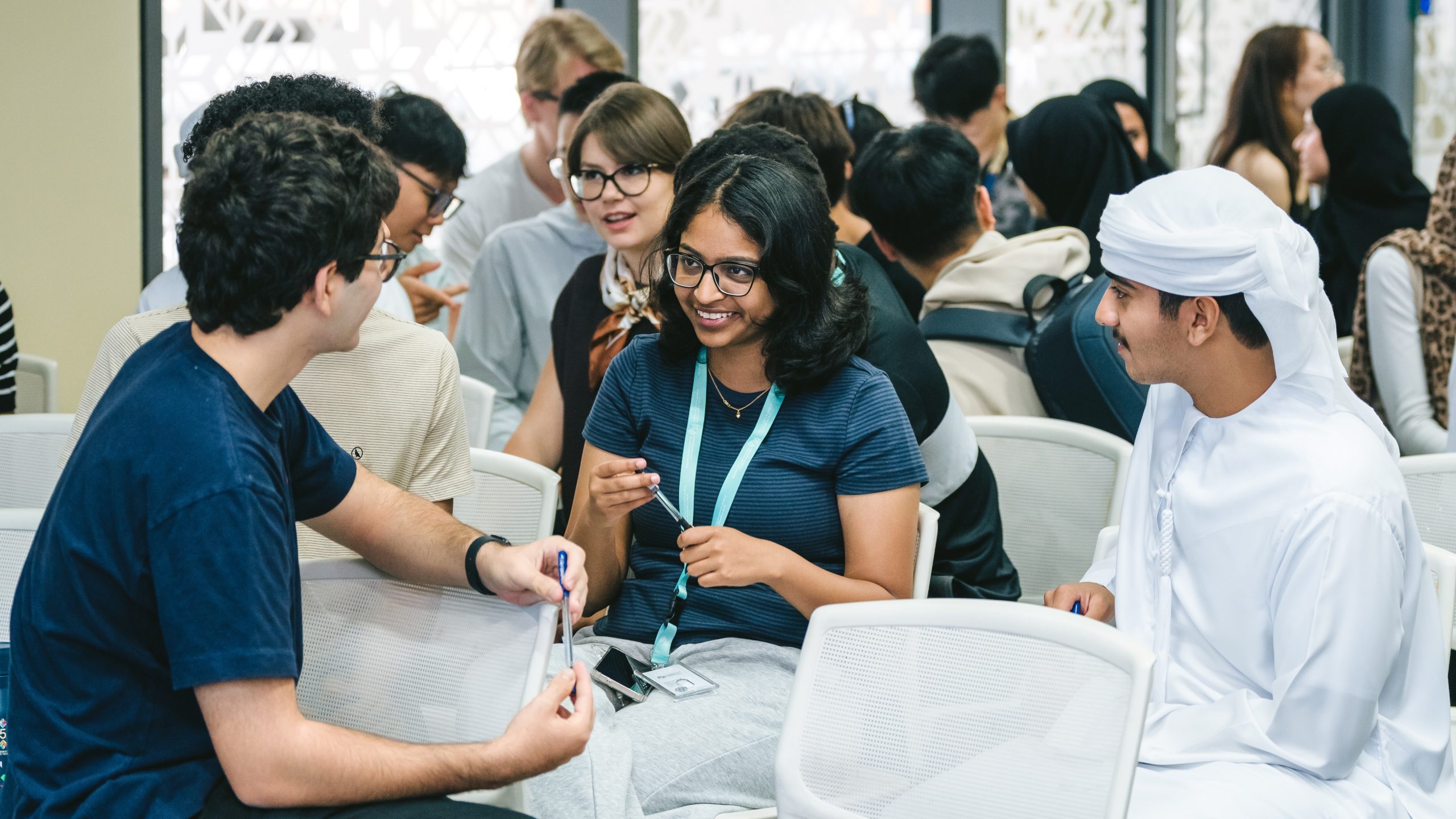
MBZUAI opens the 2026-27 academic year with first cohorts in computational biology and human-computer interaction
- academic year ,
- faculty ,
- students ,

A principled approach to cross-device federated learning
MBZUAI researchers have developed FedFit, a new framework for more efficient federated learning on resource-constrained devices.
- icml ,
- conference ,
- student research ,
- research ,
- machine learning ,

How AI collaboration during training can improve reasoning
Research from MBZUAI demonstrates how collaborative training enables AI models to build stronger, more diverse reasoning abilities.
- collaborative reasoning ,
- llms ,
- icml ,
- training ,
- machine learning ,