
Hagai Rossman
Affiliated Assistant Professor of Personalized Medicine
Research Interests
Professor Rossman's research interests lie at the intersection of healthcare and machine learning, applying modular and knowledge-infused methods to advance modeling of the health disease continuum. A central theme of his research is bringing new AI technologies, including self supervised learning and large language models, to deep phenotyping data from the Human Phenotype Project. This work spans multiomics, imaging, wearables, and lifestyle measures to discover biomarkers, predict health trajectories, and reveal underlying mechanisms. Email
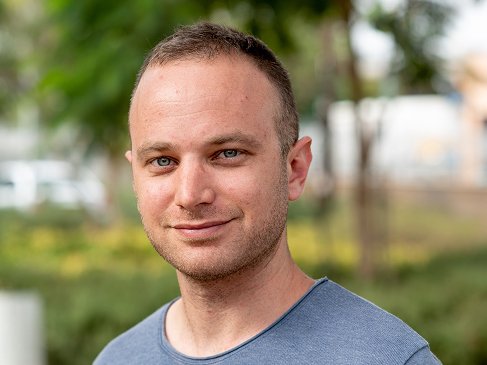
Professor Rossman obtained his Ph.D. in Computer Science from the Weizmann Institute of Science. Alongside his role at MBZUAI, he is leading research at Pheno.AI and helped found the Human Phenotype Project, a large-scale deep phenotyping cohort that integrates multi-omics, imaging, wearables, and lifestyle measures to model the health–disease continuum. His earlier work with nationwide electronic health records focused on building predictive and causal models for early-life health, pregnancy, and comparative effectiveness of treatments, demonstrating how real-world data can yield actionable clinical insights. During the COVID-19 pandemic, he directed efforts to provide near real-time intelligence for policymakers, developing digital surveillance platforms, forecasting models, and vaccine impact assessments that informed national and international responses.
- Ph.D. in Mathematics and Computer Sciences, Weizmann Institute of Science, Israel
- M.Sc. in Physics, Weizmann Institute of Science, Israel
- B.Sc. in Electrical Engineering / B.Sc. in Physics (double major), Tel Aviv University, Israel
- B.A. in Multidisciplinary Studies, University of Haifa, Israel
Developing a series of omics analysis tools, including the first fully automated AI agent for multi-omics analysis.
- The Human Phenotype Project: Deep phenotyping of the health–disease continuum. Reicher, et. al ;. Nature Medicine, 2025.
- From glucose patterns to health outcomes: A generalizable foundation model for continuous glucose monitor data analysis. Lutskeret. al;. arXiv, 2024.
- CGMap: characterizing continuous glucose monitor data in thousands of non-diabetic individuals. Keshet et. al ;. Cell metabolism, 2023.
- Phenome-wide associations of sleep characteristics in the Human Phenotype Project et. al ;. Nature Medicine, 2025.
- COVID-19 dynamics after a national immunization program in Israel. Rossman et. al ;. Nature medicine, 2021.
- Hospital load and increased COVID-19 related mortality in Israel. Rossman et. al ;. Nature communications, 2021.
- A framework for identifying regional outbreak and spread of COVID-19 from one-minute population-wide surveys. Rossman et. al ;. Nature Medicine, 2020.
- PyMSM: Python package for Competing Risks and Multi-State models for Survival Data. Rossman et. al ;. Journal of Open Source Software, 2022.
- Prediction of childhood obesity from nationwide health records. Rossman et. al ;. The Journal of Pediatrics, 2021.
- Estimating the effect of cesarean delivery on long-term childhood health across two countries. Keshet & Rossman et. al ;. PloS one, 2022.
- Axes of a revolution: challenges and promises of big data in healthcare. Shilo, Rossman, Segal,;. Nature medicine, 2020.
Related
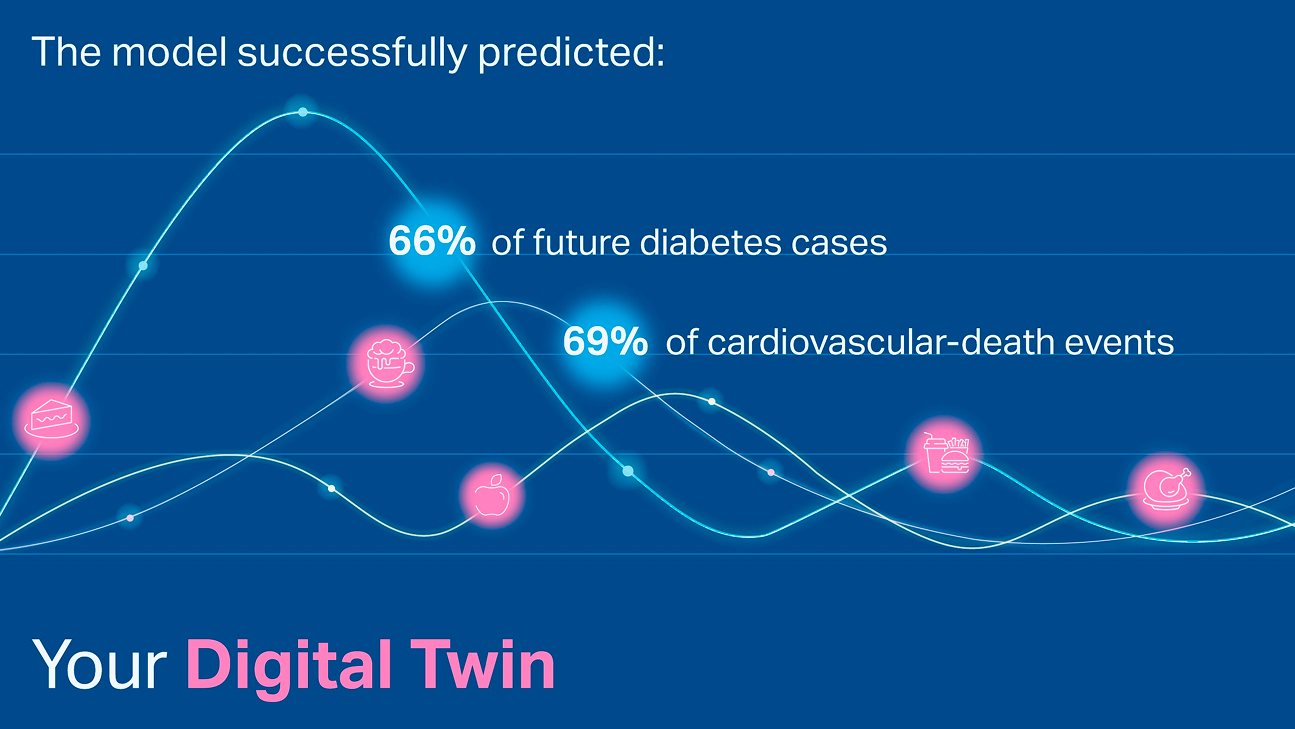
AI foundation model GluFormer outperforms clinical standards in forecasting diabetes and cardiovascular risk
Nature-published paper with MBZUAI researchers demonstrates how AI can transform glucose data into powerful predictors of long-term…
Read moreContact faculty affairs
Interested in working with
our renowned faculty?
Fill out the below form and we will get back to you.