
Designing the human side of AI
Thursday, January 08, 2026
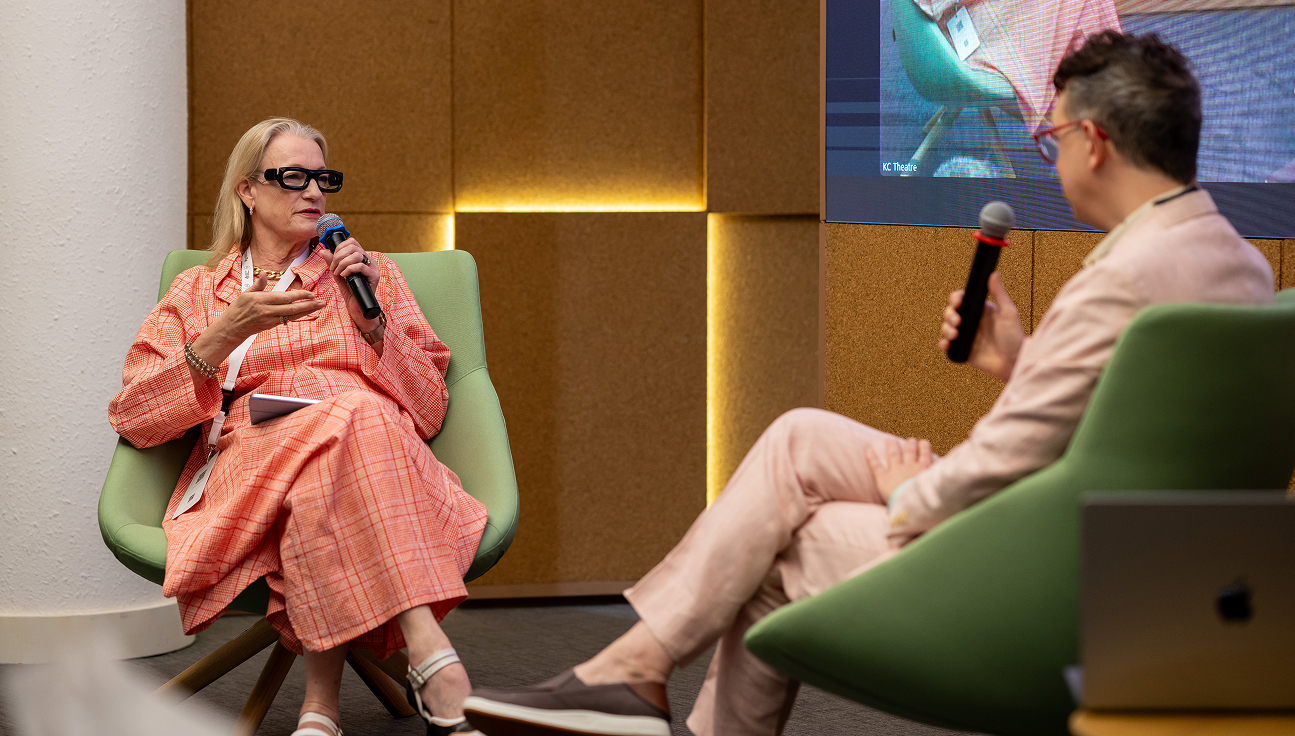
How will humans and intelligent systems share the same world? That was the core question at MBZUAI’s inaugural Human-Computer Interaction (HCI) Symposium – a first-of-its-kind gathering bringing leading thinkers to Abu Dhabi to define how we live and work alongside AI.
Titled ‘The Future of Being Human’, the event was spearheaded by Elizabeth Churchill, Department Chair and Professor of HCI at MBZUAI. It moved beyond the usual focus on algorithms and infrastructure to center on the people and societies being reshaped by them.
“People realize that AI is going to change everything,” Churchill says. “The world is waking up to the fact that they are participants in shaping what AI becomes.”
For Churchill, this rising literacy makes HCI indispensable. As AI becomes more conversational and embedded in daily life, research that anchors design in actual human needs and long-term well-being has never been more urgent.
“HCI always starts with the question first – the why,” she explains. “If you build technology without thinking about why, for whom, or how it fits into people’s lives, we end up with tools that are not wanted, not useful, or sometimes harmful.”
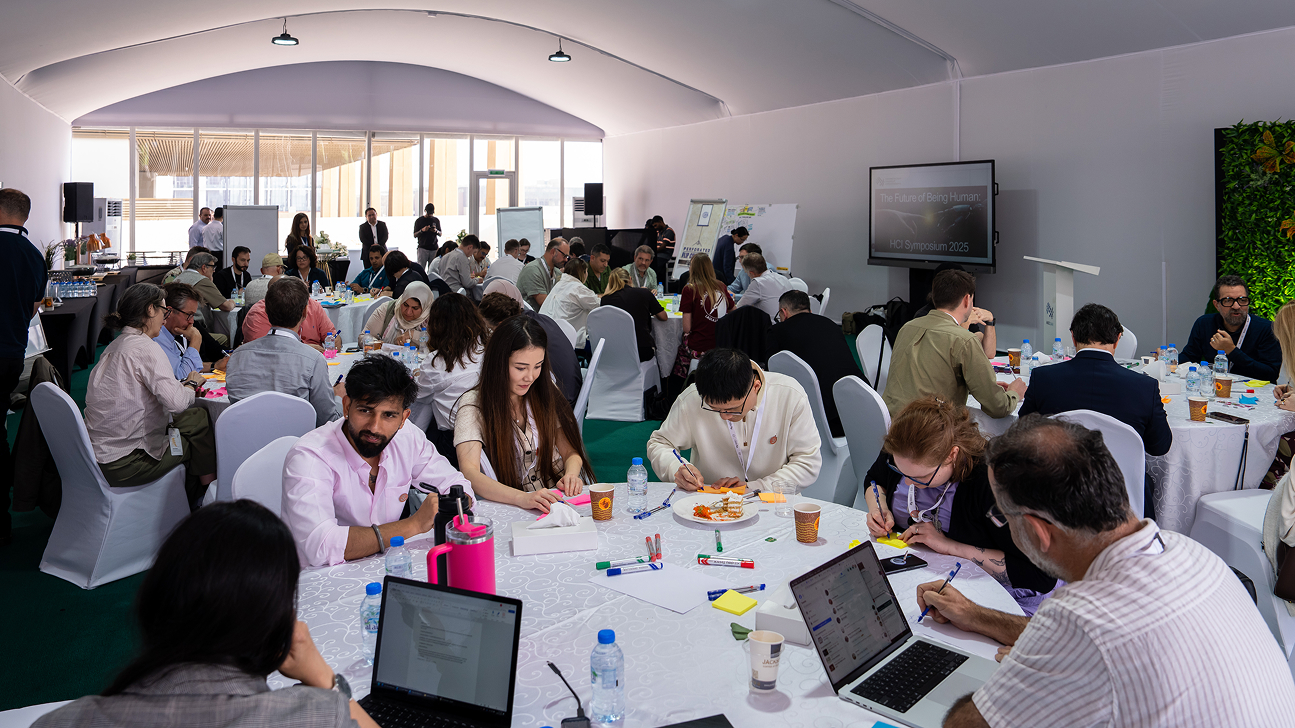
Participants of the HCI Symposium took part in workshops and sprint sessions during the two-day event.
A symposium for practical outcomes
The event was structured to drive results – combining keynotes with hands-on, sprint-style collaboration. Google VP and Design Fellow Matias Duarte opened day one by exploring critical design aspects of creating “mature” human–AI interfaces and interactions, while day two featured Walter Werzowa, Professor at the University of Music and Performing Arts Vienna, on the intersection of sound, music, and AI for well-being. Panels delved deeper into health, human-centred governance, and the “many lives” of data.
For Marta Rey Babarro, Advisory Board Member at the University of Michigan’s School of Information, the gathering marked a moment of “gigantic change.”
“Today, we have a new technology that behaves differently than all the technologies we have studied previously,” she says. “What Elizabeth has done with this symposium is historic in the field – bringing together top thinkers from all over the world to really think about the important issues and how to work together to solve them.
“Until now, humans have been in control of technology – we knew what would happen if we hit a button or entered some information. Now it’s a fluid conversation between the technology and us as humans, and we have not truly studied how those interactions play and evolve with one another on a human level, as well as on a technological and social one.”
Leveraging her background as co-founder of the Design Sprint Academy and former Global Head of Research and Insights for ChromeOS at Google, Rey Babarro challenged the 58 attendees to an ambitious goal: co-authoring a book in just 48 hours.
“We used the Sprint methodology to bring all these people together and set a very juicy outcome, which was to write this book in a couple of days,” she explains. “We split into six multidisciplinary teams and each focused on a different area of AI and HCI, from psychology and ethics to regulation and user experience – all the things we will need to take into consideration as we move forward as researchers in this field.”
Why HCI matters more than ever
For Churchill, HCI is a “translational science”, connecting the technical to the everyday. The goal isn’t just engineering feasibility, but understanding impact: how technology shapes behavior, society, and opportunity.
“As human-centered designers and scholars, we go to where the rubber hits the road – where enduring practice is supported by technologies that weave into everyday lives seamlessly – whether that be in the classroom, the clinic, the home, or the public square,” she says.
This perspective is particularly vital in regions such as the Middle East, where digital access varies, and community adoption patterns differ.
“HCI champions the non-technical majority, shifting the focus from the architects of the code to the people whose lives are impacted by technologies that are built and deployed. HCI, as a field, demands we look beyond the seductive complexity of engineering to prioritize the true recipients – ensuring that we do not build merely because we can, but because it serves the reality of those who must live with what we create.”
A unique home for HCI
The symposium highlighted MBZUAI’s unique position. As the world’s first university dedicated entirely to AI, it is building its HCI department from a clean slate – free from legacy constraints and shaped deliberately around the realities of intelligent systems.
“From day one, we are focusing on hiring people who are technically curious, interdisciplinary, and deeply invested in evaluating how technologies affect everyday lives,” Churchill says.
She notes that HCI at MBZUAI sits at the intersection of advanced AI research and the diverse societies that will live alongside these systems.
“Most HCI people are ultimately advocates for voices that are not typically heard in the design of technology,” she says. “MBZUAI being the university that it is allows us to have these conversations openly – and in a part of the world where regulatory and societal frameworks for AI are still being shaped.”
In the UAE, where digital transformation is rapid and new technologies impact at a national scale, understanding adoption is critical. The symposium signaled MBZUAI’s readiness to lead that charge – shaping a future where intelligent systems and human needs evolve together.
Related

MBZUAI marks five years of pioneering AI excellence with anniversary ceremony and weeklong celebrations
The celebrations were held under the theme “Pioneering Tomorrow: AI, Science and Humanity,” and featured events, lectures,.....
- celebration ,
- five year anniversary ,
- ceremony ,
- event ,
- board of trustees ,
- campus ,
- students ,
- faculty ,
MBZUAI's Launch Lab equips alumni and students with practical startup tools
The six-week pilot program brought alumni and students together to turn early startup ideas into tangible ventures.
- alumni ,
- launch lab ,
- alumni relations ,
- startups ,
- entrepreneurship ,

AI and the silver screen: how cinema has imagined intelligent machines
Movies have given audiences countless visions of how artificial intelligence might affect our lives. Here are some.....
- cinema ,
- art ,
- fiction ,
- science fiction ,
- AI ,
- artificial intelligence ,