
Building the neural bridges between humans and AI
Monday, November 10, 2025
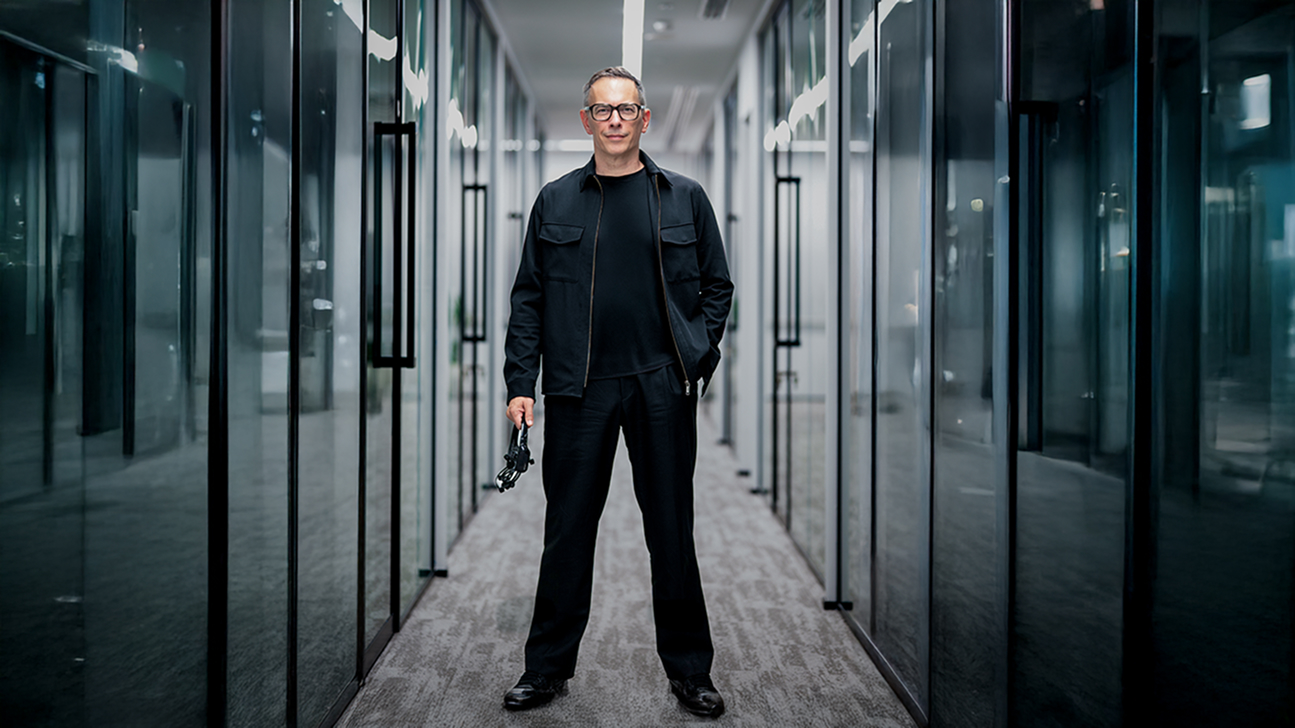
For Olivier Oullier, science began with stillness. As a child in the south of France, he was misdiagnosed with a condition that kept him from running or playing sports for a while. Instead, he sat on the sidelines, watching.
“I couldn’t play, so I observed,” recalls MBZUAI’s Visiting Professor of Practice, Human Computer Interaction. “I tried to predict what people would do next, how they interacted with each other and their environment. That was my first ‘data collection’ experience, I guess.”
That quiet curiosity became a lifelong quest to understand the human brain and behavior – culminating in the design and commercialization of technologies that monitor and predict how we interact with machines and make decisions.
Oullier first studied movement science before turning to neuroscience and functional brain imaging, exploring coordination dynamics and embodied cognition: the idea that thoughts and emotions are grounded in the body and its interactions with the environments. After earning his Ph.D. and completing postdoctoral work in complex systems in the U.S., he later became a tenured Professor of Behavioral and Brain Sciences at Aix-Marseille University in France.
A turning point came when the Prime Minister of France entrusted him with designing and leading the country’s first-ever neuroscience and public policy program. Its success led to the World Economic Forum (WEF) naming him a Young Global Leader.
“That recognition changed everything,” he says. “For the first time, I was surrounded by people who didn’t dismiss my interdisciplinary vision of making brain–computer interfaces an everyday commodity – they encouraged it and gave me the means to turn it into reality.”
At WEF, he became Global Head of Health and Healthcare Industries, devising and leading the largest Value-Based Healthcare coalition to date by forging public–private partnerships to tackle misalignment in care delivery to reduce costs and improve patient outcome.
Later, as President of California-based neurotech world leader EMOTIV, Oullier helped bring neuroscience into daily life through affordable wearable neuro-devices, including the first commercial brain-sensing earbuds, and a large-scale brain data remote collection platform.
Multimodal AI meets brain-computer interface
In 2022, Oullier co-founded Inclusive Brains, developing a Neural Foundation Model and multimodal cognitive AI agents that enable machines and digital environments to sense and to adapt in real time to who their users are, how they feel, and what they do.
Unlike models trained only on text or images, their hardware-agnostic AI system also integrates neurophysiological and behavioral signals. It fuses data from brainwaves, eye-tracking, facial expressions, heartbeats, voice, and movement, allowing machines to build a representation of the world closer to the one our brains create. The implications are not only transformative but also life-changing – especially for people of determination
Inclusive Brains’ product, Prometheus BCI – developed in partnership with Allianz Trade – has already achieved multiple noninvasive BCI (brain-computer interface) world firsts. Among its extraordinary feats, it has enabled individuals with severe cognitive and motor disabilities to carry the Olympic torch with a mind-controlled exoskeleton, finalize and submit a parliamentary amendment, and communicate hands- and voice-free with the President of France, Emmanuel Macron, on social media.
For Oullier, these achievements – always performed live in front of large audiences – are not performances but proofs of possibility.
“BCIs enable control of connected objects, vehicles or workstations without the need to speak, to touch, or to move – what is often referred to as ‘mental commands’,” he says. “My friend Rodrigo Hübner Mendes ‘mind-controlled’ a real Formula 1 race car on a real track. Others wrote messages or played music without moving or speaking – all thanks to AI-powered noninvasive neural interfaces.
“Our work is therefore not just about accessibility – it’s about equity. Universal design should be the default, not the exception. AI is making this possible not only in one-off demonstrations, but in ways that will ultimately be scalable and affordable for all. Still, the journey to making these solutions truly pervasive is far from easy.”
Inclusive Brains is often presented in the media as ‘an answer to Neuralink’. Oullier is a lot more measured: “Our goal is to make this technology accessible to everyone. This is why our solutions are hardware-agnostic and noninvasive. They do not require surgical intervention and implants and therefore can be used in all sorts of daily settings,” he explains.
Looking ahead, he envisions AI as contextual: machines that not only process information, but are able to understand memory and emotions, and capable of mapping the world in which they operate, making them truly adaptive and predictive. To achieve this goal, Inclusive Brains and IBM – a partner of MBZUAI – have already tested more than 350,000 algorithmic combinations as part of a research and development partnership aimed at optimizing BCIs with quantum informatics. “Science becomes innovation only when it meets a human need and a market,” says Oullier. “And innovation becomes progress only when it improves lives.”
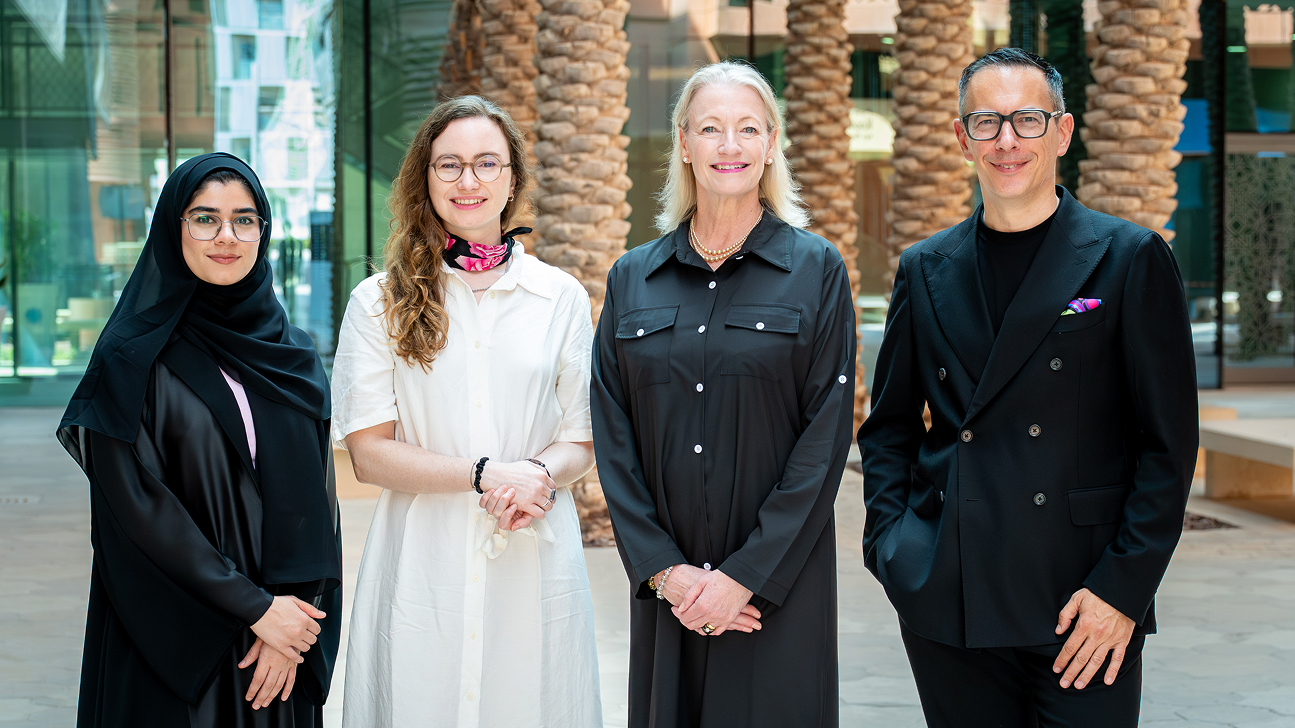
MBZUAI’s Human-Computer Interaction department: Haleema Bakhsh, Laura Koesten, Elizabeth Churchill, Olivier Oullier.
Human–Computer Interaction at MBZUAI
Earlier this year, Oullier joined the Human–Computer Interaction (HCI) department at MBZUAI, led by Elizabeth Churchill.
Churchill – formerly a Google executive with a background as a principal research scientist at leading companies including eBay, Yahoo, and PARC – is one of the most accomplished figures in human-computer interaction and cognitive systems research.
Oullier believes that the next major breakthroughs in AI will stem from neuroscience, with a key focus on cross-disciplinary collaboration. At MBZUAI, he is surrounded by world-class researchers in robotics, computer vision, machine learning, natural language processing, and other fields. “Nowhere else in the world can you find so many leading AI researchers working together under one roof,” he says.
He cites the release of the open-source AI reasoning system K2 Think by MBZUAI’s Institute of Foundation Models as proof of what collaboration can achieve: cutting-edge science, interface design, market strategy, and global launch execution. For students, the unique MBZUAI ecosystem is transformative: “They graduate with scientific excellence and can also aquire product development and go-to-market skills”.
In healthcare, he collaborates with Biotech Dental Group to develop AI products that enhance surgeons’ performance while improving wellness and patient outcomes. At MBZUAI, one area he focuses on is how multimodal AI can improve coordination dynamics between surgeons and robots in the operating room.
“Being able to work daily with leading lights like Eric Xing in machine learning, Elizabeth Churchill in HCI, Sami Haddadin, Yoshiro Nakamura and Cesare Stefanini in robotics, Tim Baldwin in natural language processing, Ian Reid and Hao Li in computer vision – I could go on and on – is the very reason I am at MBZUAI,” he says.
In education, together with Churchill and HCI Assistant Professor Laura Koesten, he develops adaptive learning environments that adjust to each student’s rhythm – personalizing academic teaching but also professional training and upskilling. His AI-powered innovations detect in real time when users are stressed, focused, fatigued or experience cognitive overload, and adapt accordingly to boost performance while preserving physical and mental health – whether in classrooms, in Abu Dhabi hospitals, or on construction sites.
Oullier is equally focused on responsible AI : “AI evolves at the pace of discovery, computation, and regulation. Our responsibility is to ensure innovation remains ethical, inclusive, and beneficial to all. While the responsibility of regulators is not to slow down or, even worse, to prevent the release of AI-powered innovation that can improve lives or even save some.”
From schoolyard observations to adaptive AI systems, his mission remains to bridge the biological and the artificial. “A brain on its own is useless. It finds purpose only when it connects and shares. Science works the same way – it thrives not in isolation, but in collaboration.”
Related
Designing the human side of AI
MBZUAI’s inaugural HCI Symposium explored how people will live and work alongside AI, and how to ensure.....
Read More
AI and the silver screen: how cinema has imagined intelligent machines
Movies have given audiences countless visions of how artificial intelligence might affect our lives. Here are some.....
- cinema ,
- art ,
- fiction ,
- science fiction ,
- artificial intelligence ,
- AI ,
MBZUAI Opens Applications for First Ph.D. Cohort in Human-Computer Interaction
Mohamed bin Zayed University of Artificial Intelligence (MBZUAI) has opened applications for its first Ph.D. cohort in.....
Read More