
Alumni Spotlight: Building medical AI from the ground up
Tuesday, March 24, 2026
For researchers working at the intersection of AI and medicine, building powerful models is only part of the challenge. Ensuring those systems address real clinical needs can be just as difficult.
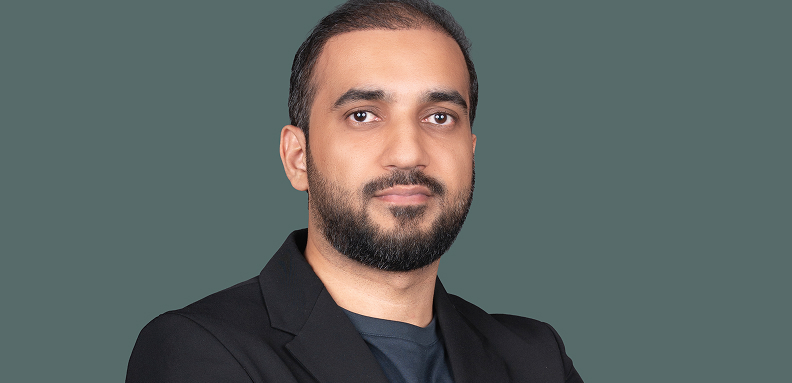
MBZUAI alumnus Numan Saeed has made the pursuit of that impact central to his work. Since becoming the University’s first Ph.D. graduate in 2024, he has continued to focus on applying machine learning to medical imaging and cancer research. Now a research scientist at the University, he develops AI systems designed to help clinicians interpret complex scans and better understand how diseases progress.
One of the biggest obstacles in that process, he argues, is that researchers and doctors do not always start from the same problems.
“I believe AI researchers should reach out to doctors more often,” he says. “Most of the time, researchers and engineers decide for themselves what problem they want to solve. But when you meet doctors, they often say that this is not really a problem they are focusing on.”
That gap between technological ambition and clinical reality is something Saeed is trying to solve for – collaborating with hospitals across the UAE to build the datasets needed to ensure AI is working for the benefit of doctors and patients.
“We are collaborating with local hospitals not just for data, but for the expert clinical feedback and annotations that ensure our models work in real-world settings,” he says. “These include the likes of Sheikh Shakhbout Medical City, Cleveland Clinic, Burjeel, and Corniche Hospital.
“We have already got some great large-scale data sets – for example, more than 200,000 fetal ultrasound scans.”
Datasets of this scale are essential for training modern AI models. By analysing thousands of scans, algorithms can learn to recognise subtle patterns in medical images, potentially helping clinicians detect disease earlier or analyse complex cases more quickly.
This work aligns closely with the UAE’s wider ambitions for healthcare, where AI is increasingly used to improve patient outcomes and support clinical decision-making. By collaborating with hospitals and training models on locally generated data, Saeed’s research contributes to national efforts to enable earlier diagnosis and more personalized care.
New foundation models
With the help of these datasets, Saeed and his team are developing a new model focused specifically on cancer.
“We are currently focused on the HECKTOR project, which addresses head and neck cancer by utilizing a large-scale, multi-modal dataset collected from more than 10 centers around the world, including here in the UAE,” he says. “This work involves developing a lightweight and deployable, end-to-end solution for tumor segmentation from CT and PET scans, as well as staging and prognosis.”
He and the team are working with “multiple radiologists” across the UAE for annotation, testing, and feedback, while acquiring more local data to ensure the model is practical for clinical use. But that’s not all.
“We have also received approval for a Department of Health grant to build a Cancer Foundation Model using data from UAE hospitals,” he adds. “This project focuses on breast, colorectal, and head and neck cancer.
“Our aim is to develop state-of-the-art models to aid in early cancer detection, diagnosis, and prognosis. We plan to use multimodal health data, such as electronic health records, imaging data, and genomics, to improve the early detection of common cancers in the UAE early and advance precision medicine.”
Looking further ahead, Saeed and his team are also developing a medical world model, with the aim of helping doctors explore even more effectively how diseases evolve and how patients might respond to different treatments.
“While current AI excels at pattern recognition, world models are systems that learn to simulate the dynamics of a clinical environment,” he explains. “This allows us to move from passive prediction to proactive simulation.
“The central promise of a world model is the capacity to produce a usable mental movie of the future. Instead of merely classifying data, the ideal assistant would generate a plausible clinical trajectory for a patient under alternative interventions. This allows clinicians to compare different treatment options and their potential outcomes – such as changes in illness progression or patient health metrics – before committing to a specific clinical decision.”
Implicit in all of these models is the need to maintain humans in the loop. For Saeed, the point of AI in healthcare is not to replace clinicians, but support their expertise: combining the power of machine learning with the knowledge and judgement that doctors bring to patient care.
“If the clinician and the AI models are working together and addressing the problem as a team,” he says, “then you’re going to have a much better chance of solving the real problems. It takes human involvement to do that – not just AI.”
Much of this thinking builds on the wider body of research that Saeed has been involved in at MBZUAI since joining the University in 2021.
Working within the BioMedIA group under Associate Professor of Computer Vision, Mohammad Yaqub, Saeed focused his doctoral research on how deep learning models could analyze complex medical imaging data, with head and neck cancers a central focus. As the seventh most common cancer worldwide, these diseases present significant challenges for clinicians, who must interpret multiple types of imaging data while considering a wide range of clinical variables.
Saeed’s work aimed to develop models capable of learning from these different data sources simultaneously, helping doctors detect tumors more accurately and better understand how the disease might progress.
The research also laid the groundwork for many of the projects he pursues today. “I mainly work on cancer diagnosis and prognosis, and recently I have been working also on ultrasound data sets for fetal ultrasound and echocardiography,” he says.
Across these projects, the goal remains consistent: building AI tools that can help clinicians interpret increasingly complex medical data while keeping human expertise firmly at the centre of decision-making.
Advice for the next generation
Having been part of the MBZUAI community since it first opened its doors, Saeed has gained a unique perspective on how to make the most of the University, and what it takes to succeed in a fast-moving research field such as AI.
“Students need to be persistent,” he says. “They should have a problem that they are interested in and want to solve, and then commit to it. Too often, students choose a problem, stumble upon some issues, and leave it. But consistency is needed.
“To help with that, they should choose the supervisor with whom they have the best chemistry. The supervisor should also be interested in the problem they are trying to solve, so you can work together and make it a joint priority. Getting these choices right from the beginning is vital.”
That persistence is particularly important in fields such as medical AI, where solving meaningful problems often requires long-term collaboration across disciplines – from computer scientists and engineers to clinicians and healthcare institutions.
As Saeed has shown, curating that collaborative mindset is key to working effectively with doctors and hospitals, and developing solutions that work in the right way for the right people. Ultimately, he believes the most important advances in medical AI will come not from algorithms alone, but from researchers who are willing to work closely with doctors, hospitals and patients.
For the next generation of MBZUAI students, that mindset may prove just as important as any technical breakthrough.
- healthcare ,
- medicine ,
- alumni ,
- dataset ,
- Alumni Spotlight ,
- world model ,
- collaboration ,
- research scientist ,
Related
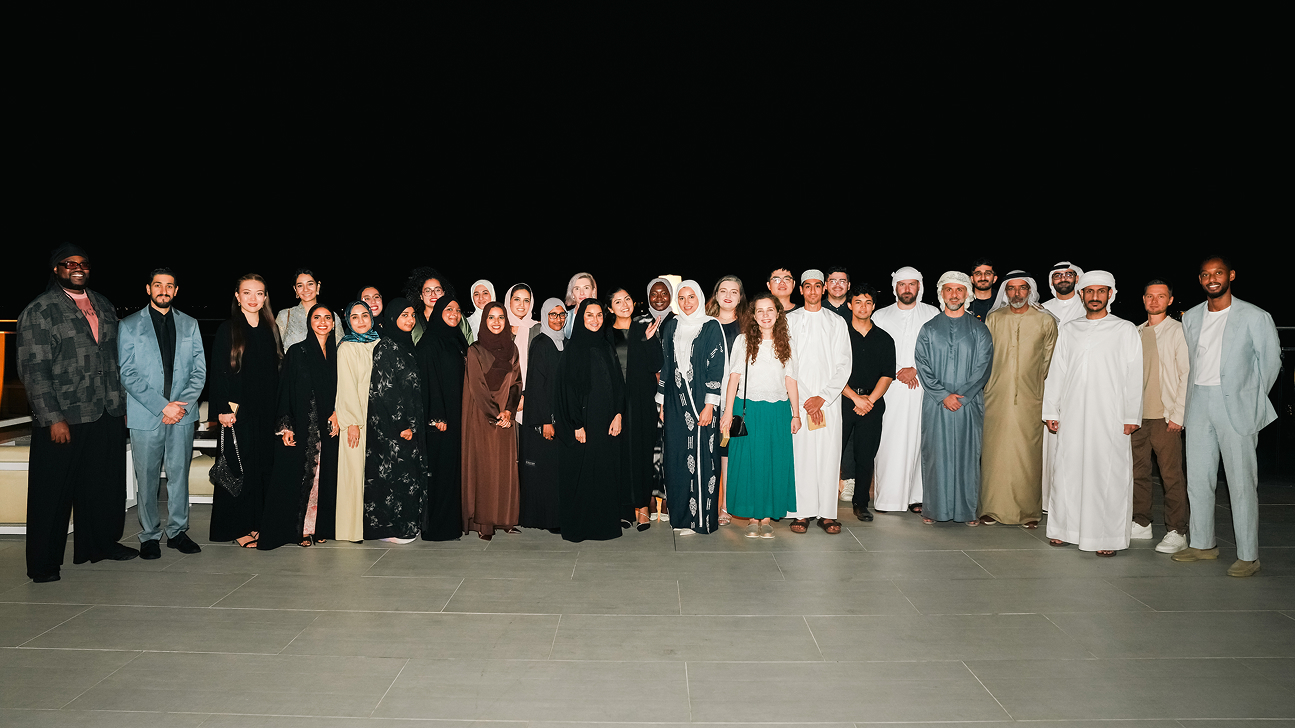
MBZUAI community comes together for Alumni Suhoor
Alumni, faculty and staff came together during Ramadan for a night of connection and conversation.
- community ,
- alumni relations ,
- alumni ,
- students ,
- faculty ,
- event ,
- suhoor ,
- ramadan ,
- alumni advisory board ,
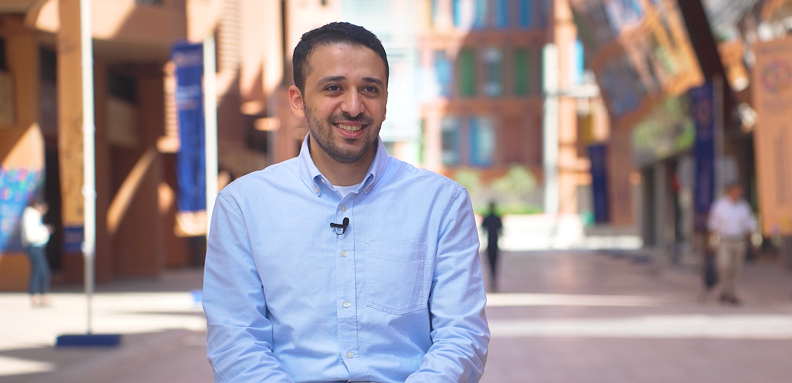
Alumni Spotlight: How Abdelrahman Shaker learned to redefine impact in AI
The MBZUAI alumnus explains how his focus has changed from papers to purpose since being awarded his.....
Read More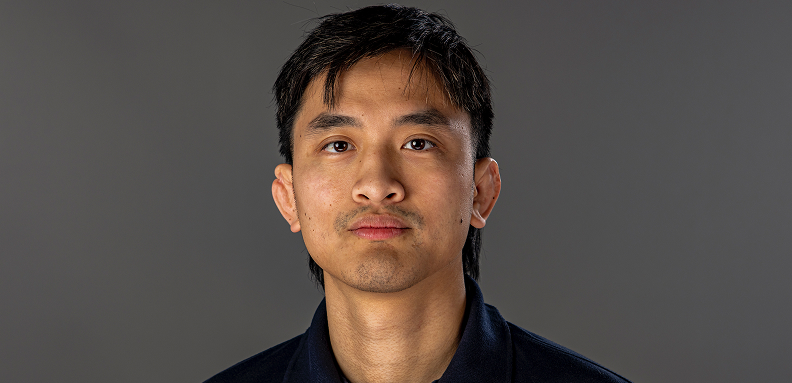
Alumni Spotlight: driving AI transformation at a financial giant
MBZUAI alumnus Steven Hoang explains how he is using his master’s in machine learning to help shape.....
- student ,
- Alumni Spotlight ,
- finance ,
- alumni ,
- machine learning ,