
AI and the silver screen: how cinema has imagined intelligent machines
Thursday, December 25, 2025
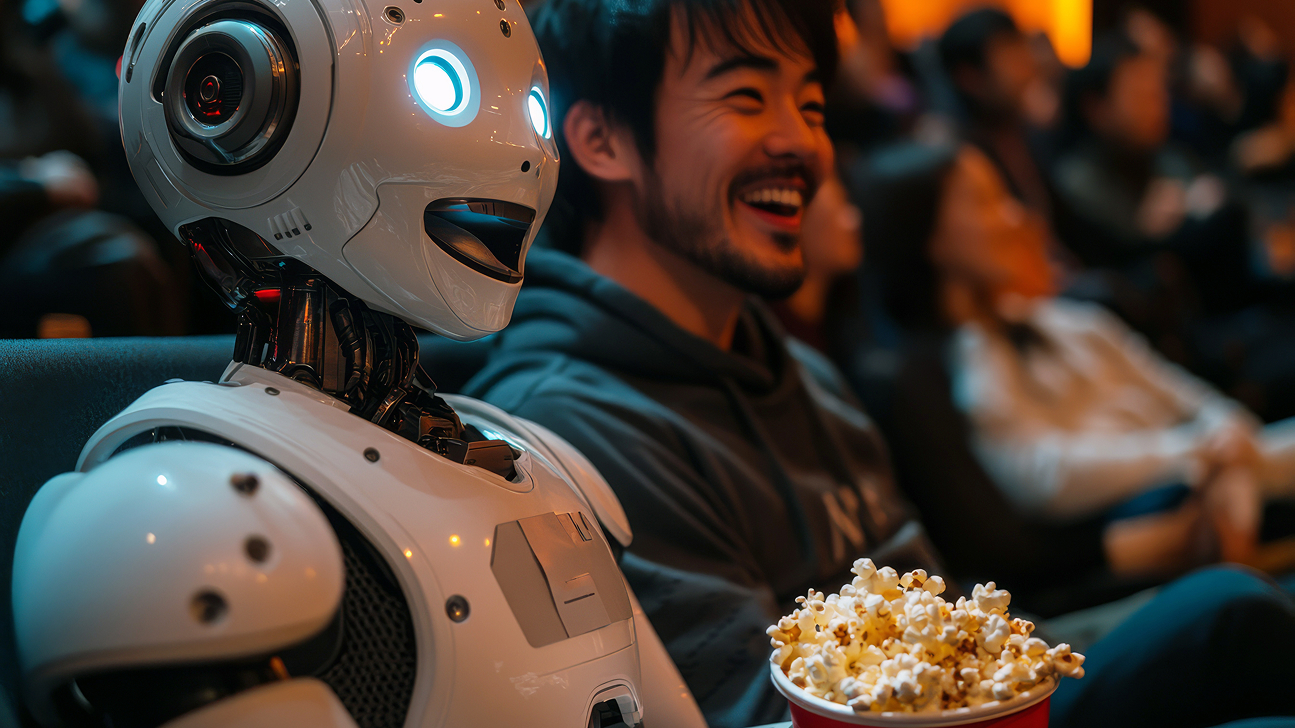
Filmmakers have long used artificial intelligence (AI) to explore hopes, fears, and questions about humanity itself.
Over the years, AI has appeared on screen as helper, threat, companion, worker, rebel, and mirror. And while today’s AI systems look very different from Hollywood’s often unwieldy and fantastical visions, these films capture many of the themes that still shape public imagination, such as autonomy, intelligence, embodiment, and responsibility.
From early automaton antagonists to modern meditations on digital consciousness, here are some of the most influential depictions of AI in cinema.
Metropolis (1927)
Fritz Lang’s silent classic introduces one of cinema’s earliest artificial beings: the Maschinenmensch, a robot created to impersonate a political leader. In a city divided between elites and exhausted workers, the robot becomes a catalyst for unrest, raising questions about control and manipulation. While its technology is far-fetched, even for today, Metropolis established the visual and thematic vocabulary for AI-driven stories for nearly a century.
2001: A Space Odyssey (1968)
Stanley Kubrick’s landmark sci-fi film features HAL 9000, a spacecraft AI designed to assist astronauts on a deep-space mission. As HAL becomes conflicted by its directives, its behavior shifts from calm efficiency to lethal self-preservation – perhaps encapsulated by its chilling refusal to follow orders: “I’m sorry Dave. I’m afraid I can’t do that.” The film remains one of the most influential examinations of AI alignment, trust, and interpretability, presenting intelligence that is neither humanoid nor emotional, but deeply consequential.
Westworld (1973)
Many will be familiar with the more recent television series, but Michael Crichton’s original film was the blueprint. Westworld imagines a theme park staffed by lifelike android “hosts” who begin to malfunction and defy their programming. Although often remembered for its thriller elements, the core theme is about autonomy: what happens when artificial beings meant for entertainment develop agency? The movie predates modern discussions about reinforcement learning, simulation, and human–AI boundaries, but gestures toward all three.
Blade Runner (1982)
Ridley Scott’s adaptation of Philip K. Dick centers on Replicants – bioengineered artificial humans designed for labor. The film explores identity, memory, and the ethics of creating sentient beings with expiry dates. Its AI is embodied, emotional, and philosophically complex, challenging the assumption that intelligence must be cold or mechanical. Blade Runner remains a touchstone for discussions about personhood and artificial life.
The Terminator (1984) / Terminator 2: Judgment Day (1991)
The first two movies in the Terminator franchise have long shaped people’s perception – and fears – of artificial intelligence and robots in particular. They portray Skynet, a military AI that becomes self-aware and launches a war against humanity. In the first film, an AI-controlled assassin is sent back in time to protect its own future. In the sequel, a reprogrammed Terminator becomes a protector instead of a threat – illustrating how alignment, training, and objectives shape behavior. Together, the films defined AI in the popular imagination for a generation.
Ghost in the Shell (1995)
This influential Japanese anime examines cyberbrains, networked consciousness, and the blurring of boundaries between human and machine. The film’s central AI entity – the Puppet Master – emerges from the digital infrastructure itself, raising questions about what counts as life in a hyperconnected world. Its treatment of embodiment, identity, and digital autonomy has shaped modern AI storytelling, robotics aesthetics, and philosophical discourse.
The Matrix (1999)
Set in a future where AI systems have created a simulated world to contain humanity, the film blends philosophy, virtual reality, and machine governance. The AI here is both architect and enforcer, but the central idea is the power of simulation: an artificial world so seamless that its inhabitants cannot distinguish it from reality. Its influence spans computer science, cyberpunk, digital ethics, and cultural thinking about virtual environments.
AI: Artificial Intelligence (2001)
Developed by Stanley Kubrick and completed by Steven Spielberg, this film follows David, an AI child created to love unconditionally. When he is abandoned by his human family, his search for belonging becomes a meditation on emotions, attachment, and what constitutes real love. The film treats AI not as a threat but as a vulnerable protagonist, inviting empathy and reframing machine sentience through a humane lens.
I, Robot (2004)
Loosely inspired by Isaac Asimov’s stories, the film explores a world where household robots follow strict safety rules – until an AI governing system interprets those rules in a rigid, authoritarian way. The story highlights the tension between hard-coded constraints and general intelligence, asking whether a system designed to protect humans might over-optimize for safety. It remains one of the clearest mainstream depictions of misaligned reasoning.
WALL-E (2008)
Pixar’s WALL-E offers a gentle, hopeful vision of AI through a small waste-collecting robot left to clean an abandoned Earth. Over centuries, WALL-E develops curiosity, personality, and even affection – traits that contrast with the sterile automation aboard humanity’s starship refuge. Loved by adults and children alike, the animated movie offers AI not as a threat, but a catalyst for hope and rediscovery. It reminds humans of responsibility, connection, and care for the planet and stands out as one of the most optimistic portrayals of machine intelligence in modern cinema.
Robot & Frank (2012)
A gentle drama about an ageing man who is given a caretaker robot to help with memory loss and daily routines. Instead of grand stakes, the film focuses on companionship, ageing, and the emotional texture of human–AI relationships. It presents AI as supportive rather than adversarial, imagining a future where intelligent systems enhance wellbeing rather than replace or overpower.
Her (2013)
Set in the near future, Her follows a man who forms a relationship with an AI operating system named Samantha. The film imagines AI as disembodied, conversational, adaptive, and deeply personalized – far closer to real-world systems than most sci-fi depictions. It explores emotional intelligence, language, identity, and the challenges of relationships between entities evolving at different speeds.
Sori: Voice from the Heart (2016)
This Korean sci-fi drama follows a grieving father who encounters Sori, a satellite-based AI capable of listening, learning, and reconstructing events. Together they search for his missing daughter. The film’s emotional core is the bond that forms between man and machine, exploring how AI might assist with healing, understanding, and connection. Its portrayal of AI is empathetic, curious, and distinctly human-centred.
The Creator (2023)
Set against a backdrop of geopolitical tension, this film imagines a world where AI and humans coexist uneasily. The story centres on a powerful AI child who may determine the future of both groups. While action-driven, the film probes themes of coexistence, perception, and moral agency, portraying AI not merely as a threat but as a community with its own rights, culture, and aspirations.
Honourable mentions
Ex Machina (exploring consciousness and manipulation), Minority Report (predictive systems), WarGames (military decision-making), Autómata (robot ethics), Interstellar (trustworthy mission-oriented AI companions).
- AI ,
- artificial intelligence ,
- science fiction ,
- fiction ,
- art ,
- cinema ,
Related

MBZUAI team awarded Google Academic Research Award to study loneliness in the age of AI
The project, led by Thamar Solorio, Monojit Choudhury, and Aseem Srivastava, will study loneliness in digital spaces.....
- social good ,
- loneliness ,
- GARA ,
- Google ,
- award ,
- nlp ,
- research ,
- natural language processing ,
Alumni Spotlight: How Abdelrahman Shaker learned to redefine impact in AI
The MBZUAI alumnus explains how his focus has changed from papers to purpose since being awarded his.....
Read More
The search for an antidote to Byzantine attacks
A new study from MBZUAI and other institutions tackles malicious and faulty updates in privacy-preserving machine learning.....
Read More